Automotive Industrial Ovens are engineered heating systems used to cure, dry, bond, and finish vehicle components. They support processes such as powder coating, e-coat curing, paint drying, adhesive activation, and sealant treatment. Unlike household ovens, these systems manage precise temperature profiles, airflow, humidity, and production timing.
A typical oven may include insulated chambers, burners or electric heaters, circulation fans, exhaust controls, and conveyor systems. Some factories use continuous ovens for body panels and frames. Others use batch ovens for smaller parts, repair work, or changing production requirements. The correct design depends on material thickness, coating chemistry, line speed, and required curing conditions.
Small details matter. Uneven airflow can leave a hidden coating defect. Excessive heat may distort plastic parts or weaken an adhesive. Insufficient curing can reduce corrosion resistance and shorten service life. Engineers therefore verify oven performance with temperature mapping, process records, and regular maintenance. These practices help manufacturers meet supplier specifications and quality expectations.
Energy use also deserves attention. Heat recovery, improved insulation, and smart burner controls can reduce waste without compromising product quality. However, efficiency claims should be tested against real operating data. A modern control panel does not guarantee a stable process.
Understanding Automotive Industrial Ovens means examining more than temperature. It requires attention to materials, safety systems, production reliability, and long-term operating costs. The technology is practical, but not effortless. Each application still needs careful testing and informed adjustment.
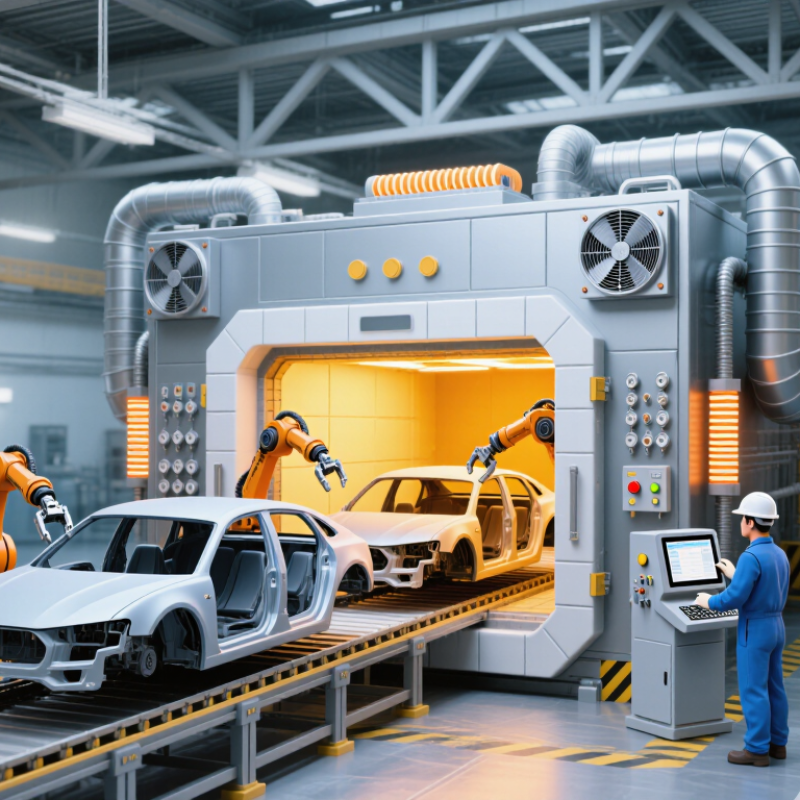
Automotive industrial ovens are enclosed thermal-processing systems used to heat, dry, cure, or stabilize vehicle components. They operate with controlled temperature, airflow, time, and exhaust conditions.
In a body shop, an oven may cure powder coatings on metal panels. In battery production, it can remove moisture from electrode materials or dry protective coatings. The purpose is simple: create repeatable heat treatment that ordinary ambient drying cannot provide.
The International Energy Agency’s Global EV Outlook 2024 reported more than 14 million electric cars sold worldwide in 2023, representing nearly 18% of new car sales. This growth increases demand for precise thermal processing in battery, motor, and lightweight-material production.
An oven must protect sensitive parts while maintaining uniform heat across large chambers. Small temperature differences can cause coating defects, trapped moisture, or uneven bonding.
Energy use remains a practical concern. The U.S. Department of Energy identifies industrial process heating as a major opportunity for efficiency and emissions reduction.
Yet efficiency figures can mislead when they ignore warm-up cycles, air leakage, or rejected parts. That deserves closer measurement.
Operators should verify temperature uniformity with mapped sensors, inspect airflow regularly, and record actual energy per finished component. A technically advanced oven still performs poorly if loading patterns change every shift.
Automotive industrial ovens cure paint, sealants, adhesives, and powder coatings under controlled heat. Their operation is more precise than simply “baking” parts. A conveyor moves body panels through separate temperature zones. Burners or electric elements heat the air, while fans recirculate it across the surface. Sensors measure product temperature, airflow, and chamber pressure. A control system adjusts heat output when conditions drift.
The U.S. Department of Energy’s 2022 Industrial Decarbonization Roadmap reports that process heating uses about 51% of manufacturing energy in the United States. This figure explains why oven efficiency matters. High recirculation rates reduce heat loss, but excessive airflow can disturb coatings or spread contaminants. Exhaust systems remove solvents and moisture. Interlocks stop heating when fans fail or unsafe conditions appear, consistent with NFPA 86 safety principles. In practice, cure quality depends on the part’s metal thickness, coating chemistry, conveyor speed, and actual part temperature. Air temperature alone can mislead operators.
Tips: Validate the cure schedule with data loggers, not assumptions. Place sensors near heavy sections and shaded surfaces. Check filters, burner balance, and door seals regularly. Energy monitoring can reveal wasted heat, although the readings may need careful interpretation. Small leaks often remain invisible during a busy production shift. A useful review compares oven temperature, exhaust rate, defect records, and energy per finished vehicle. Perfect control is difficult. Continuous verification is more realistic.
Automotive industrial ovens provide controlled heat for painting, bonding, curing, and drying vehicle components. Their temperature, airflow, and processing time must remain stable. Small gaps matter. Uneven heat can create weak adhesive joints, poor paint gloss, or surface defects.
Batch ovens handle smaller production runs and irregular parts, such as brackets, wheels, and replacement panels. Operators load parts onto racks and adjust the cycle for each material. These ovens offer flexibility, but loading can take time. Conveyor ovens support continuous production. Parts move through heated zones on a fixed line, allowing consistent processing for doors, body shells, and structural components.
Curing ovens harden coatings, sealants, and adhesives after application. They often use carefully controlled hot air, infrared energy, or a combined system. Paint drying ovens remove water or solvents from coated surfaces without damaging the finish. Powder coating ovens require accurate heat distribution because the powder must melt and form a uniform film.
Modern systems use sensors, airflow monitoring, and data logging to verify each cycle. Technicians may place temperature probes on test parts during commissioning. This reveals cold spots that basic settings can miss. Energy recovery can reduce heat loss, although poorly maintained insulation still wastes power. No oven performs perfectly without maintenance. Filters clog, fans lose efficiency, and calibration can drift. These details deserve regular inspection in real production environments.
What Are Automotive Industrial Ovens?
Automotive industrial ovens are controlled heating systems used to cure, dry, bond, and finish vehicle components. They provide stable temperatures across metal, plastic, composite, and coated parts. In production, this control supports repeatable quality and reduces defects caused by uneven heating.
Key Applications in Automotive Production
Paint curing is a major application. After spraying, body panels enter an oven where heat hardens coatings and improves surface durability. Powder-coated brackets, wheels, and structural parts also require carefully managed curing cycles. Operators monitor air temperature, conveyor speed, and part loading to prevent dull areas, blisters, or incomplete finishes. Small details matter.
Adhesive curing is equally important. Doors, roofs, windshields, and battery enclosures may use heat-activated bonding materials. The oven must deliver enough heat without damaging seals, plastics, or sensitive electronics. Drying ovens remove moisture from cleaned components before painting or assembly. Composite parts can receive controlled heating for dimensional stability and reliable bonding. Some factories also use ovens for preheating metal before forming.
In real production, temperature maps are not always perfect. Part geometry, airflow, and crowded racks can create cold spots. Engineers often adjust fans, sensors, and cycle times after testing actual components. Energy use also deserves attention, because frequent door opening wastes heat. A practical oven design balances throughput, safety, maintenance access, and consistent process results.
Safety, Energy Efficiency, and Quality Considerations
Automotive industrial ovens cure coatings, dry adhesives, and heat-treat components. Their safety design must control flame, airflow, temperature, and pressure. NFPA 86 recommends purge cycles, flame supervision, emergency shutdowns, and explosion relief for applicable oven systems. These controls matter near solvent vapors and hot metal. A small sensor fault can damage parts or stop production.
Energy efficiency deserves equal attention. The U.S. Department of Energy’s Industrial Process Heating report estimates that process heating consumes about 61% of manufacturing energy. Insulation quality, door leakage, exhaust balance, and heat recovery directly affect this demand. A practical check is simple: inspect door seals while the oven operates. Warm air around the frame signals wasted energy. Variable-speed fans can also reduce unnecessary airflow, although poor tuning may create uneven heating.
Quality depends on more than the displayed setpoint. AIAG’s CQI-9 heat-treat guidance emphasizes temperature uniformity, calibration, and documented process control. Technicians should map cold spots with multiple thermocouples and verify curing results through hardness, adhesion, or coating tests. Uniformity failures can hide behind a normal controller reading. A perfect oven is unrealistic. Even a well-maintained system needs repeated validation, especially after repairs or production changes.
They cure paint, sealants, adhesives, and powder coatings. They also dry parts and preheat metal before forming.
Burners or electric elements heat the air. Fans recirculate it across the parts. A conveyor moves components through temperature zones.
Thick metal heats slowly. Shaded surfaces may stay cooler. The displayed air temperature can look correct while the part remains under-cured.
Body panels, brackets, wheels, doors, roofs, and enclosures may require controlled heating. Composite parts can also need careful curing.
Use data loggers and multiple temperature sensors. Place sensors near heavy sections and shaded areas. Test hardness, adhesion, or coating appearance afterward.
Cold spots may create dull finishes, blisters, weak bonds, or incomplete curing. Crowded racks and poor airflow often contribute.
Damaged door seals, excessive exhaust, poor insulation, and frequent door opening release heat. Warm air around a closed door signals possible leakage.
Systems should monitor flames, airflow, temperature, and pressure. Purge cycles and emergency shutdowns help prevent dangerous conditions.
Check filters, burner balance, fans, sensors, and seals regularly. Revalidate after repairs or production changes. Perfect control is unlikely. Continuous checking works better.
Automotive Industrial Ovens are specialized heating systems used in vehicle manufacturing to apply, cure, dry, or heat-treat materials and components under carefully controlled conditions. They help ensure that coatings, adhesives, sealants, composites, and metal parts achieve the required strength, durability, appearance, and dimensional stability. By controlling temperature, airflow, humidity, and processing time, these ovens provide consistent results throughout production.
Common types include batch ovens, continuous conveyor ovens, curing ovens, drying ovens, and heat-treatment systems. Their applications range from paint and powder-coating operations to adhesive curing, component drying, and preparation of metal parts. Safe operation requires reliable temperature controls, ventilation, fire-prevention measures, and routine maintenance. Energy efficiency is also important, so modern systems may use insulation, heat recovery, optimized airflow, and precise process controls to reduce waste. Together, these considerations support high product quality, safer workplaces, and more sustainable automotive production.

XUD Ovens