Tunnel furnaces play a crucial role in various industries, including ceramics, glass, and metal production. These powerful machines offer efficient thermal processing, significantly impacting product quality and manufacturing costs. With advancements in technology, they have evolved to meet the growing demands of modern production.
This article explores the top 10 tunnel furnace models you need to know about. Each model showcases unique features that cater to specific applications. While they all offer exceptional performance, their efficiency can vary widely. Choosing the right tunnel furnace is vital to achieving optimal results.
Understanding tunnel furnace capabilities is essential for any manufacturing professional. It's not just about the initial investment; maintenance and operational efficiency matter too. Reflecting on these factors can help prevent costly mistakes and enhance productivity. The right model can transform your operational process and drive success.
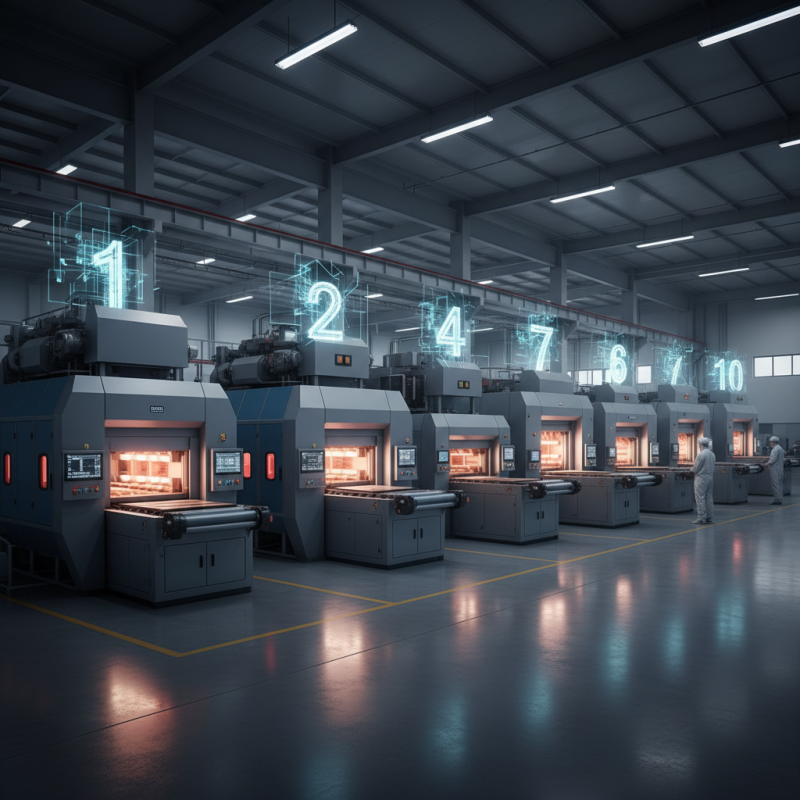
Tunnel furnaces are critical in various industrial applications such as metal processing, ceramics, and glass manufacturing. They provide a continuous heating process, essential for products that require uniform temperature control. According to a recent report by Frost & Sullivan, the global tunnel furnace market is projected to grow by 5.8% annually, reaching $2.5 billion by 2025.
The efficiency of tunnel furnaces lies in their design. They utilize a conveyor system, allowing products to move through different heating zones at controlled rates. Each zone can maintain specific temperatures. This capability ensures a consistent quality of the final product, essential for industries like aerospace and automotive. However, maintaining optimal energy consumption remains a challenge. Energy waste can occur if the temperature gradients are not carefully monitored.
Despite advancements, some manufacturers still face issues such as uneven heating and frequent maintenance. These challenges underscore the importance of selecting the right configuration. Industry experts recommend continuous evaluation of furnace performance. This kind of critical reflection can lead to significant improvements in operational efficiency and product quality. The potential for innovation within tunnel furnace technology continues to drive interest and investment in this area.
When evaluating tunnel furnace models, several key performance metrics are essential. First, consider the temperature uniformity throughout the furnace. Uneven heating can lead to inconsistent product quality. Aim for minimal temperature variation across the length of the furnace. This characteristic is critical for achieving uniform results in your processes.
Energy efficiency is another crucial metric. A furnace that utilizes less energy while maintaining performance is more sustainable. Look for models that have high thermal efficiency. These tend to have better insulation and advanced heat recovery systems.
**Tip:** Regular maintenance can improve efficiency. Check insulation regularly and ensure seals are intact to prevent heat loss.
Another important factor is the throughput. Measured in how much product can be processed in a given time, it directly impacts productivity. Models with higher throughput can streamline operations. However, be cautious; prioritizing speed without quality may harm your overall output.
**Tip:** Establish a balance between speed and quality. Monitor your process to identify any slowdowns or quality drops. This reflective practice can lead to continuous improvement.
When considering tunnel furnaces, energy efficiency is a key factor. Different models offer varying efficiencies that can significantly impact operational costs. Understanding these differences is essential for manufacturers. Some tunnel furnaces maximize energy use through innovative heat recovery systems. Others emphasize optimal airflow for uniform heating. Each design choice influences overall performance.
The energy efficiency ratings among leading models vary widely. Some models boast impressive numbers, showcasing their ability to reduce energy consumption effectively. However, this efficiency often comes with higher upfront costs. Buyers should carefully weigh the long-term savings against these initial investments. Balancing efficiency and cost can be challenging, but it's vital for sustainable production.
Not all furnaces perform equally in real-world conditions. Environmental factors, such as installation and maintenance, also play a role. Routine upkeep is necessary to maintain efficiency, yet it can be overlooked. Buyers should consider not just the furnace itself, but how it will fit into their existing processes. This comprehensive understanding is necessary for making an informed decision.
Modern tunnel furnaces are evolving rapidly. They incorporate innovative features that significantly enhance production efficiency. Recent industry reports highlight that these advancements can boost operational capabilities by up to 30%. This improvement reduces energy costs and shortens processing times.
One notable feature is advanced temperature control. This technology ensures consistent thermal profiles within the furnace. Inconsistent temperatures can lead to defects in the final product. Precision in heating is crucial for achieving desired material properties. Enhanced insulation materials also contribute to energy savings. These materials minimize heat loss, thus improving overall furnace efficiency.
Moreover, automation in tunnel furnaces is becoming commonplace. Smart systems monitor performance in real time. This allows for prompt adjustments during operation. Reports indicate that automated processes can lead to a 20% increase in production rates. However, reliance on automation raises concerns about maintenance and skill shortages among workers. As the industry embraces these changes, it must also consider the long-term implications on workforce training and equipment upkeep.
This chart illustrates the production efficiency (in units per hour) of the top 10 tunnel furnace models, showcasing their innovative features that enhance production. The data reflects typical performance metrics observed in modern industrial applications.
Tunnel furnaces have reshaped manufacturing processes across various industries. One notable case is the automotive sector. Here, manufacturers use tunnel furnaces for heat treatment of components. The consistent, controlled environment ensures uniform heating. This results in improved material properties, enhancing performance and durability. Resilience to distortion during processing is a key advantage.
In ceramics, tunnel furnaces are vital for sintering processes. A manufacturer implemented a tunnel design with multiple zones. Each zone operates at different temperatures. This customization leads to precise control over the properties of finished products. However, achieving uniformity can be challenging. Even slight variations can impact quality, necessitating constant monitoring.
In glass production, tunnel furnaces facilitate efficient melting and forming. A real-world example shows the transition from batch processes to continuous flow. This shift increased output and reduced energy consumption. Yet, transitioning systems involves complex adjustments. Companies must rethink logistics and employee training to achieve optimal results.
: Energy efficiency impacts operational costs significantly. It is essential for manufacturers to understand these differences.
Models vary widely in energy efficiency. Some achieve better energy use through heat recovery systems; others focus on airflow.
Higher efficiency often means higher upfront costs. Buyers need to compare long-term savings against initial investments carefully.
Environmental factors like installation and maintenance can affect performance. Routine upkeep is critical for maintaining efficiency.
Advanced temperature control is one key feature. It ensures consistent heating and reduces defects in the final product.
Automation can increase production rates by 20%. However, it raises concerns about maintenance and skilled worker shortages.
Precision ensures desired material properties and minimizes defects. Inconsistent temperatures can compromise the quality of products.
Enhanced insulation materials minimize heat loss, directly improving energy efficiency. This feature is crucial for reducing overall energy costs.
Buyers need to evaluate how the furnace fits into existing processes and maintenance requirements.
While advancements boost efficiency, they also require skilled workers for maintenance. Balancing technology and workforce training is essential.
Tunnel furnaces are essential equipment in various industrial applications, allowing for continuous heating processes that enhance manufacturing efficiency. This article provides an overview of tunnel furnace technology, highlighting its versatility and the key performance metrics important for evaluating different models. Energy efficiency emerges as a critical factor, with a detailed comparison of leading tunnel furnace brands showcasing advancements in this area.
Modern tunnel furnaces incorporate innovative features that significantly enhance production capabilities, making them valuable assets in manufacturing environments. The article further illustrates successful utilization through case studies, demonstrating how these systems optimize operations across diverse industries. Overall, tunnel furnaces represent a fundamental component of modern production techniques, driving improvements in efficiency and output.

XUD Ovens