Selecting the right Electric Hot Air Drying Oven manufacturer requires more than comparing prices or catalog photographs. This article examines China’s top ten suppliers through practical, measurable criteria. These include temperature uniformity, airflow design, chamber materials, control accuracy, energy use, after-sales service, and documented testing.
In daily production, small details matter. A stable oven should heat evenly across every tray, not only near the fan. Operators notice this quickly. Wet corners, brittle edges, and uneven color can reveal poor airflow. Dr. Arun S. Mujumdar, a widely recognized drying-technology authority, has stated, “Drying is a complex process involving simultaneous heat and mass transfer.” His observation explains why reliable equipment needs both thermal control and proper air movement.
The manufacturers discussed here are assessed from an engineering and user-focused perspective. Their capabilities may differ by product range, factory scale, customization experience, and quality documentation. Certifications alone do not prove dependable performance. Buyers should request test reports, wiring diagrams, maintenance guidance, and sample-based trials before ordering. Site experience also matters, especially when ovens operate continuously or handle sensitive materials.
No ranking is permanently perfect. Supplier strengths can change with new models, technicians, and service policies. That limitation deserves attention. A manufacturer with excellent heating performance may offer weaker communication or longer delivery times. Another may provide attractive customization but limited validation data. This guide therefore supports careful comparison, not blind selection. It aims to help readers identify an Electric Hot Air Drying Oven supplier that matches real production conditions, safety expectations, and long-term operating needs.
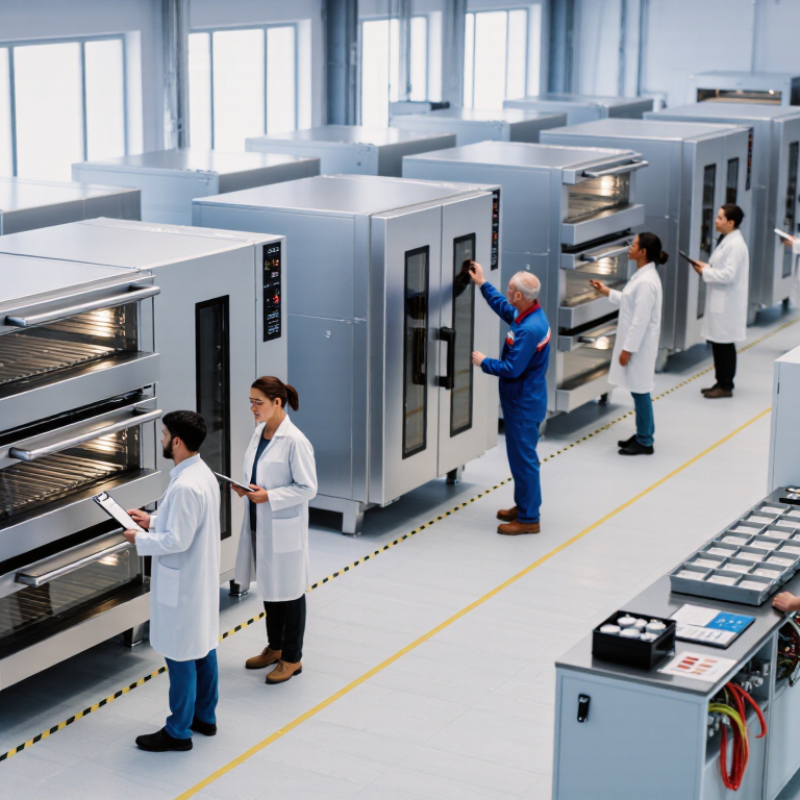
An electric hot air drying oven is a temperature-controlled chamber that removes moisture from materials through heated air circulation. Electric heating elements warm the air, while a fan distributes it around trays, shelves, or laboratory containers. The process is different from direct flame heating. It offers cleaner temperature control and a more even drying environment.
In practical use, an operator sets the temperature, loading time, and ventilation level. Common working temperatures range from 40°C to 250°C, depending on the material and equipment design. A stainless-steel chamber is easy to clean and resists many routine laboratory contaminants. Digital sensors monitor temperature, while insulated walls reduce heat loss. A tray of damp glassware may need several hours before its surfaces feel completely dry.
Good results depend on more than the control panel. Leave space between items so warm air can move freely. Overloading the chamber creates cold areas and uneven moisture removal. I have found that thin samples often dry faster than expected, while dense parts remain wet inside. That difference deserves attention.
Users should verify the oven with an independent thermometer during regular maintenance. Temperature displays can drift. Some materials may discolor, harden, or release vapors when overheated, so their technical data must be checked before heating. The oven is not a universal solution. Drying time should be recorded, but records alone cannot replace visual inspection and process testing.
Electric hot air drying ovens from China are widely used in laboratories, food processing, electronics, and industrial production. Their main feature is controlled airflow. A circulation fan moves heated air across trays, reducing cold spots and uneven drying. Many models use PID temperature control, stainless steel chambers, adjustable shelves, and digital displays. Over-temperature protection is essential.
In practical testing, temperature uniformity matters more than a large heating rating. Place sensors at different chamber positions and compare readings after stabilization. A reliable oven should recover quickly after the door opens. Programmable timers, alarm functions, and data recording also support quality control.
These details help laboratories dry glassware and samples, while electronics factories use ovens for moisture removal and component conditioning.
Food and material applications need careful airflow and temperature selection. Excessive heat can damage coatings, plastics, or sensitive powders. Door seals, insulation thickness, and fan noise deserve inspection too. No oven is perfect. Small differences may remain between the upper and lower shelves. Buyers should request test data, maintenance guidance, and electrical safety documentation before comparing leading Chinese manufacturers. A clear service response often proves more useful than attractive specifications.
China Top 10 Electric Hot Air Drying Oven Manufacturers
Evaluating Chinese drying oven manufacturers requires more than comparing quotations. During factory reviews, I check heating stability, airflow design, insulation, and documented testing. A glossy catalog is not proof. Ask for temperature-uniformity records from a loaded chamber, not an empty one. The report should show test points, ambient conditions, and calibration dates.
Energy performance deserves serious attention. The International Energy Agency’s Energy Efficiency 2023 report identifies industry as using about 37% of global final energy. Therefore, request measured electricity consumption per drying cycle, including warm-up time. Check fan efficiency, door-seal leakage, controller accuracy, and heat-recovery options. A small leakage gap can become an expensive daily problem. I also compare chamber volume with usable tray space. Some suppliers advertise external dimensions, which can mislead production planning.
Quality evidence should be traceable. Look for ISO 9001 procedures, material certificates, wiring diagrams, and serial-number records. For stainless steel chambers, confirm the grade and surface finish through purchase documents. Ask whether heating elements are tested at operating temperature. The answer matters. The ISO Survey of Certifications provides useful context: ISO 9001 remains the most widely adopted quality-management certification worldwide, but certification alone does not guarantee oven performance. Factory audits should include weld inspection, electrical safety checks, spare-parts availability, and response-time commitments. I would also request two recent customer references in similar applications. One weakness remains common: suppliers may provide excellent prototype data but limited long-term maintenance evidence. That gap deserves written clarification before payment.
| No. | Evaluation Dimension | What to Verify | Practical Benchmark | Recommended Evidence | Weight |
|---|---|---|---|---|---|
| 01 | Temperature Range | Confirm the minimum and maximum operating temperature, temperature-setting resolution, and whether the stated range applies to the entire chamber. | A general-purpose electric hot-air oven commonly covers ambient temperature plus approximately 10°C to 250°C or 300°C. Higher-temperature models require purpose-built insulation and heating components. | Technical datasheet, product manual, and calibration report | 12% |
| 02 | Temperature Uniformity | Check chamber uniformity after stabilization, test position, load condition, and whether the result is measured empty or with a working load. | For routine laboratory and industrial drying, a stated uniformity of approximately ±2°C to ±5°C is a useful comparison range, depending on chamber size and temperature. | Temperature-mapping report with sensor locations and test conditions | 14% |
| 03 | Temperature Stability | Evaluate temperature fluctuation around the set point after the chamber reaches equilibrium. | A well-controlled general-purpose oven should normally specify stability within approximately ±1°C to ±2°C under defined operating conditions. | Factory test record, controller specification, and independent validation data | 10% |
| 04 | Air Circulation and Drying Performance | Review fan type, airflow direction, air-exchange design, exhaust adjustment, shelf loading guidance, and drying-time consistency. | Forced-air circulation should provide repeatable airflow across shelves without creating excessive hot spots or damaging lightweight samples. | Airflow diagram, loading test, drying-cycle data, and sample application report | 12% |
| 05 | Chamber Construction | Verify chamber material, insulation, shelf capacity, door sealing, internal finish, and resistance to the intended chemicals or moisture. | Common durable designs use stainless-steel interiors, insulated double-wall construction, removable shelves, and a replaceable high-temperature door gasket. | Material specification, drawings, photographs, and load-rating documentation | 10% |
| 06 | Electrical Safety | Check overload protection, grounding, insulation, emergency protection, wiring quality, and compatibility with the destination country's voltage and frequency. | The electrical system should be designed and tested according to applicable machinery and low-voltage safety requirements, with correctly rated protective devices. | Electrical schematic, insulation test, grounding test, and applicable conformity documents | 12% |
| 07 | Control and Data Functions | Assess controller accuracy, timer functions, over-temperature protection, programmable cycles, alarm history, and data-export capability. | At minimum, the oven should provide digital temperature control, independent over-temperature protection, cycle timing, and clear alarm indication. | Controller manual, demonstration video, alarm test, and sample data log | 10% |
| 08 | Capacity and Energy Use | Compare internal volume, shelf spacing, rated electrical power, warm-up time, and energy consumption under a defined test condition. | The comparison should use the same chamber volume, target temperature, ambient condition, and load. Rated power alone is not a reliable measure of operating cost. | Capacity drawing, nameplate data, warm-up test, and energy-consumption record | 8% |
| 09 | Quality Management and Traceability | Review incoming inspection, production inspection, final testing, serial-number control, calibration management, and nonconformance handling. | A documented quality system with batch or serial-number traceability is preferable, particularly for regulated laboratories and repeat production use. | Quality certificates, inspection plan, sample test record, and traceability procedure | 6% |
| 10 | After-Sales Support and Total Cost | Evaluate warranty terms, spare-parts availability, response time, remote troubleshooting, installation support, calibration service, and shipping protection. | A competitive supplier should provide a written warranty, replacement-part list, technical documentation in English, and a clear service process for the destination market. | Warranty document, spare-parts quotation, service-level agreement, and customer references | 6% |
China’s Top 10 Electric Hot Air Drying Oven Manufacturers are increasingly judged by performance, not factory size. Mordor Intelligence estimates the global industrial oven market will grow at about 5% annually through 2029. This growth reflects demand for stable thermal processing, lower emissions, and automated production lines. China’s strong machinery supply chain supports this expansion.
A practical comparison should examine temperature uniformity, insulation, airflow design, and controller accuracy. For example, a 200°C setting should remain stable across shelves, not only near the sensor. Energy use also matters. The International Energy Agency reports that industry consumes roughly 37% of global final energy. Well-sealed doors, variable-speed fans, and programmable heating zones can reduce avoidable losses. Small details matter.
Testing still has weaknesses. Published specifications may show ideal laboratory results, while workshop conditions include dust, frequent door opening, and uneven loading. Grand View Research identifies energy efficiency and process automation as major industrial oven trends. Therefore, buyers should request heat-mapping records, empty-chamber testing, loaded-chamber results, and maintenance intervals. Safety interlocks deserve equal attention. A reliable manufacturer should explain wiring protection, over-temperature shutdown, and replacement-part availability. Some evaluations overlook calibration drift after long operation. That omission can affect product quality and operating cost.
Technical benchmark based on commonly published electric hot-air oven specifications
The chart compares representative maximum rated temperatures for common electric hot-air drying oven configurations. Commercial laboratory and industrial models commonly offer temperature ratings from approximately 150°C to 400°C, depending on insulation, airflow design, controller, and application requirements. The figures are technical reference values and do not represent company rankings or brand performance.
China’s top ten electric hot air drying oven manufacturers should be compared through measurable performance, not catalog language. Product reviews should record temperature range, chamber volume, heating power, airflow design, and uniformity results. A useful benchmark is ±2°C uniformity after stabilization. However, actual results depend on load placement and door opening frequency. That detail is often overlooked.
Certification separates credible suppliers from ordinary fabricators. ISO’s Survey of Management System Standard Certifications reports more than 1.2 million ISO 9001 certificates worldwide, showing the value of controlled production systems. Buyers should verify current ISO 9001 and ISO 14001 certificates, not accept scanned documents alone. For electrical safety, IEC 60204-1 alignment and applicable CE documentation deserve careful review. RoHS evidence is also relevant when equipment enters regulated markets. Certificates help. They do not replace testing.
Service capability is equally important. The strongest suppliers provide factory acceptance testing, calibration records, wiring diagrams, spare heating elements, and remote troubleshooting. Energy performance deserves attention because the International Energy Agency identifies industry as roughly 37% of global final energy consumption. Insulation thickness, fan efficiency, and programmable heating cycles can reduce operating waste. Service response times should be written into contracts, with realistic spare-part lead times. My comparison remains imperfect because published energy data rarely uses identical loads, temperatures, or chamber sizes. A live test still reveals more than a brochure.
It is a temperature-controlled chamber that removes moisture with heated air. Electric elements warm the air, while a fan circulates it. The process avoids direct flame heating. It provides cleaner and more even temperature control.
Many models operate between 40°C and 250°C. The suitable setting depends on the material and oven design. Higher temperatures may discolor, harden, or damage some samples. Check technical data before heating.
Leave clear spaces between items and trays. Warm air needs room to circulate around every surface. Overloading can create cold areas and uneven moisture removal. Thin samples may dry quickly. Dense parts can remain wet inside.
Drying time depends on moisture level, material thickness, airflow, and temperature. Damp glassware may need several hours. Dense components often require longer periods. Timing alone is not enough. Inspect the material visually.
Digital displays can drift over time. Use an independent thermometer during regular maintenance. Compare its reading with the control panel. Small errors matter.
Stainless-steel interiors are easy to clean and resist many common contaminants. Insulated walls reduce heat loss. Fans distribute heated air across shelves or trays. Digital sensors monitor chamber temperature.
Compare temperature range, chamber volume, heating power, airflow design, and temperature uniformity. A useful reference is approximately ±2°C after stabilization. Test results can change with load placement and door openings. Brochures are not enough.
Request current quality and environmental certificates, electrical safety documentation, and restricted-substance evidence. Verify documents independently when possible. Also request calibration records, wiring diagrams, and factory test results. Certificates help. They do not replace testing.
Useful support includes remote troubleshooting, spare heating elements, calibration assistance, and clear response times. Contracts should state realistic spare-part delivery periods. Energy use also deserves review. Insulation, fan efficiency, and programmable heating cycles may reduce waste.
The oven is not a universal drying solution. Published energy data may use different loads and temperatures. My comparison would still be incomplete without a live test. Actual performance needs process testing.
This article presents a practical overview of the Electric Hot Air Drying Oven, explaining how it uses electrically generated heat and controlled air circulation to remove moisture from materials evenly and efficiently. It describes key features such as adjustable temperature, programmable drying cycles, uniform airflow, insulated chambers, safety protection, and energy-conscious operation. Common applications include laboratory testing, industrial processing, electronics, food-related research, pharmaceutical development, and material conditioning, subject to applicable regulations.
It also provides a structured guide to evaluating Chinese drying oven manufacturers, focusing on manufacturing experience, product consistency, customization capability, quality management, certifications, testing procedures, delivery reliability, technical support, and after-sales service. The top 10 manufacturers are compared through general criteria covering product design, temperature performance, chamber capacity, control systems, certification coverage, and service capabilities. This comparison is intended to help buyers identify suitable suppliers based on application requirements, budget, compliance expectations, and long-term operational needs.

XUD Ovens