Industrial drying oven selection is not a simple equipment purchase. It affects product quality, energy use, worker safety, and production schedules. A suitable Drying Industrial Oven should match the material, moisture level, batch size, and required temperature range. Wood, powders, coatings, pharmaceuticals, and metal parts can respond very differently to heat. The wrong airflow pattern may leave damp corners or damage delicate surfaces.
Reliable evaluation starts with real process data. Measure the load weight, starting moisture, target moisture, heating time, and available floor space. Ask how temperature uniformity is verified, not merely advertised. Independent testing, calibration records, and clear control specifications offer stronger evidence than impressive brochures. An experienced supplier should explain insulation, exhaust capacity, ventilation, and over-temperature protection in practical terms. Look for stainless steel contact areas when cleanliness matters. Check door seals, shelves, casters, and service access closely.
There is no universal “best” oven. Continuous systems may suit high-volume production, while batch ovens can provide greater flexibility. Electric heating is often easier to install, but operating costs may change with local energy prices. Gas systems require additional site planning and approved installation. These details are easy to underestimate. I would also request a sample-load trial before committing to a large unit. One test may expose uneven drying, slow recovery, or awkward loading. That evidence can prevent an expensive correction later. Careful selection combines engineering judgment, supplier transparency, and documented performance. The goal is consistent drying, safer operation, and dependable results over years of daily use.
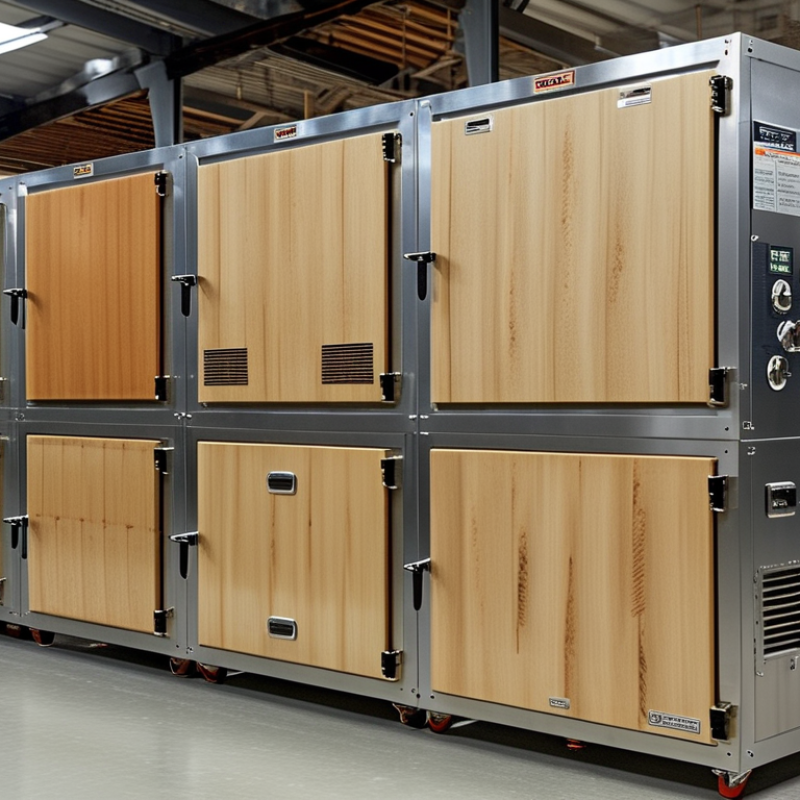
Choosing the right industrial drying oven starts with a clear definition of your drying requirements. Avoid choosing by chamber size alone. The material, moisture level, batch weight, and target temperature matter more.
I begin by recording the product’s starting moisture and acceptable final moisture. Then, I measure the thickest part of the load. Uneven thickness can create hidden wet spots. Note the required cycle time, heating rate, airflow pattern, and temperature uniformity. Also check whether the material can tolerate direct heat or needs gentle circulation.
Small details matter.
I once underestimated how much packaging affected airflow. The oven reached its set temperature, but the inner products stayed damp. That mistake changed our testing process. Now, I compare empty-chamber readings with loaded-chamber results. I also ask operators to describe loading habits, because real use rarely matches the drawing.
A practical requirement sheet should include chamber dimensions, usable shelf space, power supply, exhaust needs, controls, and data recording. It should define safety features and cleaning access too. Leave room for future production changes. A requirement that fits today may become restrictive next year.
Pilot testing provides stronger evidence than estimates. Test representative materials, realistic loads, and the longest expected cycle. Record temperature, humidity, energy use, and product condition. Review the results with production and quality teams. If the data conflicts with expectations, revise the requirement instead of forcing the oven to fit.
Choosing an industrial drying oven starts with the material, production volume, and required moisture level.
Batch ovens suit mixed loads, prototypes, and smaller production runs. Operators can adjust each cycle, but loading takes more labor.
Continuous ovens support high-volume production with steady movement through heating zones. They save handling time, although one incorrect setting can affect an entire run.
The heating method changes drying speed and product quality.
Convection ovens circulate heated air around parts, making them practical for coatings, powders, and general components.
Infrared heating transfers energy directly to exposed surfaces. It works quickly, but shaded areas may remain damp.
Vacuum ovens lower the boiling point of moisture and help protect heat-sensitive materials. They cost more and require careful sealing.
Electric heating usually offers clean, precise control. Gas heating can provide strong output, but airflow and combustion controls need closer attention.
No method is perfect. A faster cycle can create surface hardening while moisture remains inside.
In plant trials, I would place calibrated probes at several oven locations, not only near the display sensor. Do not trust the display alone.
Record inlet temperature, product temperature, airflow, drying time, and final moisture content.
Even small loading changes can disturb airflow. Leave a safety margin.
A pilot test with the real material often reveals problems that specifications miss.
Capacity affects drying consistency more than many buyers expect. Calculate product load, tray spacing, moisture removal, and loading frequency together. A chamber that looks large may still restrict airflow when fully loaded. The U.S. Department of Energy’s Manufacturing Energy and Carbon Footprint estimates that process heating uses about half of manufacturing energy. Oversizing can therefore create unnecessary operating costs.
Temperature control needs more than a high maximum rating. Check working temperature, uniformity, ramp time, and sensor placement across the chamber. ASHRAE Handbook—HVAC Applications recommends evaluating temperature distribution under real operating conditions, not only during an empty-oven test. Request mapping with a full load. Empty results can mislead.
Airflow is often the overlooked variable. Measure velocity and direction around the product, especially near corners and dense stacks. Poor circulation leaves wet spots while exposed surfaces become over-dried. NFPA 86 emphasizes suitable controls, ventilation, and safe oven operation; these checks should support, not replace, engineering judgment.
In practice, I would test the actual material with representative trays. It may reveal a design assumption that looked reasonable on paper. Record inlet temperature, exhaust conditions, weight loss, and cycle time during the trial. Small gaps between trays can matter.
Energy efficiency should be measured during real production, not only from a brochure. Check insulation quality, airflow control, and heat-up time. A programmable temperature profile can reduce unnecessary heating between batches. Door seals matter too. Small leaks can waste energy every shift. Ask for measured power data at your expected load and temperature.
Safety requires more than a temperature alarm. Look for independent over-temperature protection, reliable airflow monitoring, and secure door interlocks. The oven should suit the material being dried, including its moisture, solvents, and heat sensitivity. Local exhaust may be necessary. A documented risk assessment should guide the design. Never assume standard settings are automatically safe.
Maintenance needs are easy to underestimate. Choose an oven with accessible filters, heating elements, sensors, and fan assemblies. Calibration points should be easy to reach. Keep inspection records for temperature uniformity, alarms, seals, and electrical connections. In plant-floor use, small maintenance delays can become production losses. A cheaper oven may appear efficient on paper, yet difficult access can increase labor costs. That trade-off deserves careful review. There is no perfect choice. Each facility should test a sample load before purchase.
Choosing an industrial drying oven starts with the supplier, not a glossy temperature range. Ask about experience with your material, load size, solvent profile, and production rhythm. A capable supplier should explain airflow, insulation, controls, and heat recovery clearly. Request drawings, utility requirements, calibration records, and a practical service plan. Experience matters. So does evidence.
Speak with two or three current users, preferably those handling similar loads. Ask how the oven performs after six months, not only during commissioning. Review response times, spare-part availability, operator training, and change-order handling. A factory visit can reveal useful details: clean cable routing, accessible filters, guarded hot surfaces, and calibrated test instruments. Vague answers deserve written clarification before any deposit.
Validate the final choice using your actual trays, racks, and product recipe. Run a witnessed factory acceptance test with representative loads. Measure temperature uniformity, recovery after door opening, airflow, cycle time, and energy use. Document test conditions and acceptance limits. Repeat critical checks after installation, because transport and site utilities can change performance. I once underestimated loading variation; the oven passed empty but struggled when racks were full. That mistake changed our review process. Leave room for retesting. A perfect specification can still fit the wrong production reality.
| No. | Evaluation Dimension | Weight | Recommended Requirement | Supplier Evidence to Request | Final Oven Validation Method | Acceptance Criterion |
|---|---|---|---|---|---|---|
| 1 | Product Capacity and Loading | 15% | Chamber volume and usable load must accommodate the largest standard batch without blocking airflow or exceeding shelf load limits. | General arrangement drawing, chamber dimensions, shelf-load rating, batch-loading diagram, and maximum product mass. | Run a representative full-load trial using the actual product or an equivalent thermal load. | All required product fits safely, with no restricted airflow or unstable shelving. |
| 2 | Temperature Range | 12% | Operating range should cover the product process, commonly from ambient temperature to approximately 200–300°C for general industrial drying applications. | Published operating range, heater rating, insulation specification, and over-temperature protection details. | Test low, nominal, and maximum required setpoints under empty and loaded conditions. | Every required setpoint is reached and maintained without nuisance trips. |
| 3 | Temperature Uniformity | 15% | Uniformity must match product sensitivity; a typical starting requirement is ±3°C to ±5°C at operating temperature. | Factory uniformity test, sensor-location map, airflow design, and specified tolerance at a stated temperature. | Perform a temperature mapping study with calibrated sensors distributed throughout the usable chamber. | Measured deviations remain within the approved process tolerance at all critical locations. |
| 4 | Drying Airflow and Exhaust | 10% | Air circulation must remove moisture effectively while avoiding excessive turbulence, product damage, or uneven drying. | Fan capacity, airflow direction, exhaust rate, damper arrangement, and moisture-removal calculations. | Measure airflow behavior and compare moisture content, drying time, and product quality across the load. | Required final moisture level is achieved consistently without visible product defects. |
| 5 | Control and Data Recording | 10% | The controller should support programmable temperature and time profiles, alarm handling, and traceable process records where required. | Control-system specification, sample batch record, alarm list, password levels, and data-export format. | Verify recipe execution, alarm response, sensor-failure handling, time stamps, and data retrieval. | All approved functions operate correctly and records are complete and readable. |
| 6 | Energy Efficiency | 8% | The design should minimize heat loss through suitable insulation, controlled exhaust, efficient airflow, and appropriate heater sizing. | Insulation thickness and material, estimated energy consumption per batch, exhaust-control strategy, and heat-loss calculations. | Record electrical or fuel consumption during a defined, repeatable production cycle. | Measured consumption is within the approved project budget and process performance is maintained. |
| 7 | Safety and Compliance | 12% | The oven should include independent over-temperature protection, emergency stop functionality, guarded hot surfaces, suitable electrical protection, and documented risk controls. | Risk assessment, electrical drawings, safety-circuit description, manuals, inspection records, and applicable conformity documentation. | Challenge safety devices and verify shutdown, alarm, restart, and fault-recovery behavior. | Every defined safety function operates independently and prevents unsafe operation. |
| 8 | Construction and Cleanability | 6% | Internal surfaces should be corrosion-resistant, smooth, accessible for cleaning, and compatible with the product and cleaning agents. | Material specifications, weld-finish details, door-seal information, drain or access provisions, and cleaning instructions. | Inspect internal surfaces, perform a cleaning trial, and check for residue-retention areas. | No unacceptable corrosion, residue accumulation, sharp edges, or inaccessible contamination points. |
| 9 | Maintenance and Serviceability | 7% | Wear parts, sensors, fans, heaters, filters, and control components should be accessible and replaceable with standard maintenance procedures. | Preventive-maintenance schedule, spare-parts list, service response terms, training plan, and troubleshooting guide. | Review access points and simulate routine tasks such as sensor replacement, filter cleaning, and alarm diagnosis. | Routine maintenance can be completed safely with documented tools, steps, and intervals. |
| 10 | Delivery, Installation, and Total Cost | 5% | The proposal should include installation requirements, utilities, commissioning, training, warranty, lead time, and operating costs—not only the purchase price. | Itemized quotation, utility schedule, site requirements, delivery plan, commissioning scope, warranty terms, and lifecycle-cost estimate. | Confirm installation dimensions, utility consumption, commissioning results, documentation, and operator training. | The oven is installed on schedule, meets technical requirements, and remains within the approved total-cost plan. |
| Total Evaluation Weight | 100% | Recommended decision rule: select only ovens that meet all critical safety and process requirements and achieve an overall weighted evaluation score of at least 75/100. | ||||
Note: Temperature ranges, uniformity limits, capacity, and energy targets should be adjusted to the product, solvent or moisture load, batch size, applicable regulations, and validated process requirements.
: Batch ovens suit mixed loads, prototypes, and smaller production runs. Continuous ovens fit high-volume production with steady material flow. Batch systems offer flexibility but require more loading labor. Continuous systems save handling time, but one setting error may affect a full run.
Convection heating suits coatings, powders, and general components. Heated air moves around the parts. Results depend on airflow and loading. Dense stacks can still develop damp areas.
Infrared heating works quickly on exposed surfaces. Shaded areas may remain damp. Part shape, spacing, and surface visibility matter. Fast is not always better.
Vacuum heating lowers moisture’s boiling point. It can protect heat-sensitive materials. These ovens cost more and need careful sealing. Leaks can weaken performance.
Electric heating usually provides clean, precise control. Gas heating can deliver strong output. It requires closer attention to airflow and combustion controls. The cheaper option may create more monitoring work.
Consider product load, tray spacing, moisture removal, and loading frequency together. A large chamber may restrict airflow when fully loaded. Oversizing can increase energy costs. Bigger is not automatically more efficient.
Check working temperature, uniformity, ramp time, and sensor placement. Ask for temperature mapping with a full load. Empty-oven results can mislead. Real products behave differently.
Measure air velocity and direction around the product. Check corners and dense stacks carefully. Poor circulation can leave wet spots while exposed surfaces over-dry. Small tray gaps matter.
A pilot test can reveal problems hidden by specifications. Use representative trays and real production material. Test loading changes, cycle time, and final moisture. Paper assumptions can fail.
Record inlet temperature, product temperature, airflow, exhaust conditions, drying time, weight loss, and final moisture. Place calibrated probes at several oven locations. Do not trust the display alone. Leave a safety margin.
Choosing the right Drying Industrial Oven begins with a clear understanding of your production requirements, including material type, moisture content, batch size, drying time, and target temperature. Compare available oven designs and heating methods to determine which option provides the most suitable heat distribution, process control, and flexibility for your application. Consider whether the oven can accommodate current and future workloads while maintaining consistent airflow and temperature uniformity throughout the chamber.
Energy efficiency, operational safety, ease of cleaning, and maintenance access are also essential factors. Look for features that reduce heat loss, support stable operation, and simplify routine inspections or repairs. Finally, evaluate potential suppliers based on technical expertise, customization capabilities, service support, and documentation. Before making a final decision, validate the oven through performance testing, sample trials, and a review of operating costs to ensure it meets both production goals and long-term reliability expectations.

XUD Ovens