Choosing the right drying industrial oven is crucial for various industries. The efficiency and quality of the drying process can significantly affect production output. John Smith, a leading expert in thermal processing technology, once said, “The right oven is the backbone of effective drying.”
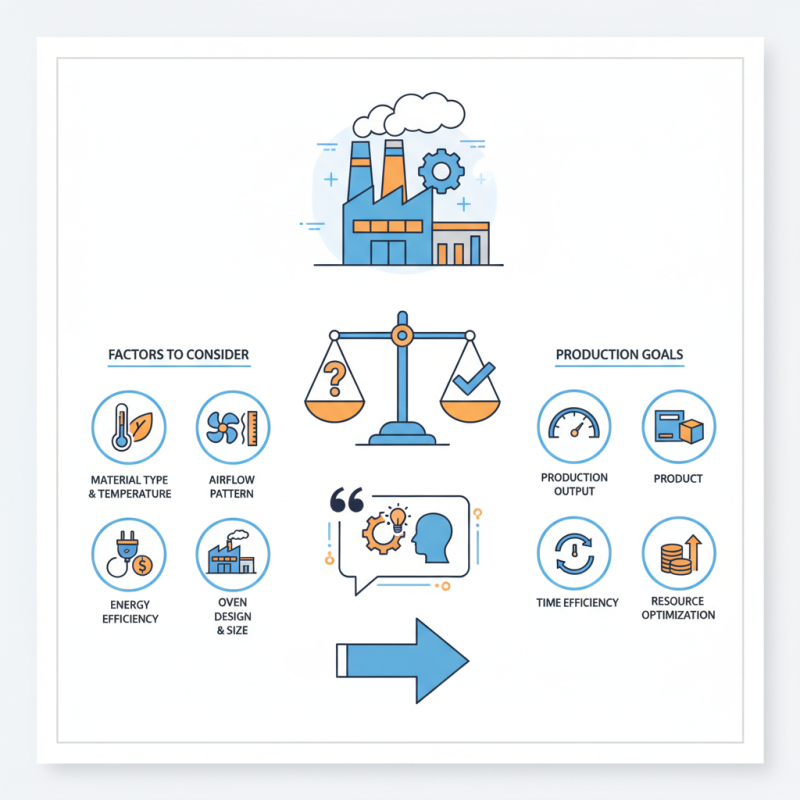
When considering a drying industrial oven, several factors come into play. The material you're drying matters. Different materials require specific temperatures and airflow patterns. Think about the oven's design, size, and energy efficiency. Choosing poorly can lead to wasted resources and time.
It’s easy to get overwhelmed by choices. There are many models available, each claiming to be the best. The decision often feels like it hangs in the balance. However, reflecting on your precise needs can guide you. Ensuring that the oven aligns with your production goals is essential. Understanding these details is vital.
When selecting a drying industrial oven, understanding your drying needs is crucial. Different materials require specific drying methods. For instance, ceramics need even heating to prevent cracking. In contrast, plastics might need lower temperatures to avoid deformation. Assess the characteristics of the materials you will be drying. This includes moisture content, thermal sensitivity, and desired drying time.
Tips: Always conduct a small-scale test before full implementation. This helps in understanding how your materials react. Also, consider airflow within the oven. Proper circulation can ensure uniform drying.
Reflecting on your requirements saves time and resources. Each material behaves differently under heat. Some may need longer exposure, while others can dry faster. Review your past projects for insights into what works best. Adjustments may be needed as conditions change. Keep an open mind about evolving your process as you gather more data.
| Material Type | Required Temperature (°C) | Drying Time (Hours) | Humidity Level (%) | Recommended Oven Type |
|---|---|---|---|---|
| Wood | 60 - 80 | 5 - 10 | 10 - 15 | Convection Oven |
| Textiles | 90 - 120 | 1 - 3 | 5 - 10 | Hot Air Oven |
| Food Products | 50 - 75 | 2 - 6 | 15 - 25 | Dehydrator Oven |
| Plastics | 100 - 150 | 1 - 4 | 0 - 5 | Infrared Oven |
| Ceramics | 200 - 1000 | 5 - 12 | 0 - 10 | Vacuum Oven |
When selecting a drying industrial oven, understanding key features is essential. Temperature accuracy is a crucial factor. Look for models that maintain consistent heat across the chamber. An even temperature distribution ensures reliable drying results. A model with adjustable temperature settings can cater to specific materials better.
Air circulation is another important feature. Ovens with proper airflow reduce moisture retention. Consider models with built-in fans for improved ventilation. Good air circulation prevents hotspots and uneven drying. Some ovens come with programmable timers. This feature allows for automated drying cycles, enhancing efficiency.
Size and capacity matter too. Ensure the oven fits the available space while accommodating your workload. A unit that's too small may require multiple batches, wasting time. Reflect on your needs. Evaluate whether a standard size will suffice or if a custom solution is necessary. These considerations can greatly impact your drying needs and operational efficiency.
When selecting a drying industrial oven, understanding energy efficiency and operational costs is crucial.
Energy-efficient ovens can significantly reduce your utility bills. Look for models that offer high thermal insulation and advanced heating technologies.
These features help maintain stable temperatures while consuming less energy. Additionally, consider the operational costs related to maintenance and repairs.
Frequent breakdowns can add unexpected expenses in the long run.
Operational costs also include labor and downtime. If an oven requires extensive monitoring, it can lead to increased labor expenses.
Many businesses overlook hidden costs until it’s too late. It’s essential to evaluate how user-friendly the equipment is and how often operators will need training.
An oven that is challenging to operate may hinder productivity and escalate costs.
Sometimes, the most energy-efficient option is not the best for your specific needs. Reflect on your production volume and type of materials processed.
The ideal choice varies for different industries. Balancing initial investment and long-term savings is essential. Conducting a thorough analysis can guide you in making the right decision.
It’s not just about the purchase price; consider the total cost of ownership.
Choosing the right drying industrial oven requires careful consideration of size and capacity. Various operations have distinct needs, and identifying the right specifications can improve efficiency. According to a report by the Industrial Heating Association, the capacity of drying ovens can range from 1 cubic foot to over 100 cubic feet. Selecting the wrong size may lead to suboptimal performance, increased energy costs, and longer processing times.
Smaller operations might benefit from a compact oven with a capacity of 10-20 cubic feet. This size is suitable for labs and small manufacturers. Conversely, larger facilities often require ovens that can accommodate batches of several thousand pounds. An oven with a capacity above 50 cubic feet typically handles higher volume production effectively. However, overestimating capacity can lead to uneven drying, resulting in wasted materials and operational delays.
Moreover, it’s essential to consider the dimensions of the space where the oven will be installed. Many facilities overlook vertical clearance and access routes. Industry data indicates that about 20% of installations face challenges due to inadequate planning. Ensure your oven fits both operational needs and available space. When making a choice, always reflect on your specific processes and the impact of each decision on production.
When choosing a drying industrial oven, understanding various drying technologies is essential.
Conventional convection drying uses hot air for even moisture removal. This method is suitable for products like grains or textiles.
Forced air circulation enhances efficiency but may not penetrate dense materials effectively.
Radiant drying employs infrared heat. It's faster and ideal for coatings or thin materials. However, it can lead to uneven drying if not monitored.
Another option is microwave drying, which acts quickly on moisture inside products.
This technology is energy-efficient but may require specialized equipment.
Considering your specific needs is crucial. Every drying method has trade-offs.
For instance, convection is popular, yet it may not meet speed requirements for some products.
Each application demands careful evaluation of factors like heat sensitivity and desired moisture content.
Balancing these considerations will lead to a more informed decision.
: Different materials need specific drying methods to prevent issues like cracking or deformation.
Conducting small-scale tests helps gauge material reactions and adjust drying conditions accordingly.
Proper airflow ensures uniform drying and helps avoid uneven moisture distribution among materials.
Look for models with high thermal insulation and advanced heating technologies to reduce utility bills.
Hidden costs like labor and maintenance can accumulate, so choose equipment that is user-friendly and requires less monitoring.
Not necessarily; the best option depends on your production volume and material types, so evaluate accordingly.
Each method has advantages and disadvantages, requiring careful evaluation based on materials and desired outcomes.
Companies often miss hidden costs and the importance of training for operators, affecting long-term productivity.
Regularly assess your drying methods as material and market conditions change for better efficiency.
Heat sensitivity, moisture content requirements, and application context are key considerations for making informed decisions.
Choosing the right Drying Industrial Oven involves a thorough understanding of your specific drying needs. This includes assessing the types of materials you will be processing and their unique requirements. Key features such as temperature controls, air circulation patterns, and compatibility with your materials play a vital role in ensuring efficient drying. Additionally, evaluating energy efficiency and operational costs can significantly impact your overall budget.
When considering the size and capacity of the oven, it's important to align these factors with your production demands. Exploring different drying technologies, such as convection or microwave drying, allows you to select the best method suited for your particular applications. By carefully analyzing these aspects, you can make an informed decision that optimally meets your operational goals while maximizing efficiency and performance in your drying processes.

XUD Ovens