Why Choose High Temperature Ovens for Industrial Use?

Time:2026-11-07 Author:Liam
0%

Why Choose High Temperature Ovens for Industrial Use?

Industrial heat treatment demands more than simply reaching a high temperature. A reliable oven must hold that temperature evenly, recover quickly after loading, and repeat the same cycle across batches. In a busy workshop, that can mean uniform color on ceramic parts, consistent hardness in metal components, or dependable curing on a production line. Hoge Temperatuur Ovens are designed for demanding thermal processes where ordinary equipment may struggle to maintain stable conditions.

The measurement principle matters. Physicist Lord Kelvin wrote, “When you can measure what you are speaking about, and express it in numbers, you know something about it.” His observation is highly relevant to oven selection: clear temperature readings and documented process data help operators spot drift before it affects a full batch. Buyers should also compare usable chamber dimensions, insulation, airflow, controls, and service support—not just the maximum temperature printed on a brochure.

Details count. A door seal that leaks, or a sensor placed poorly, can undermine an otherwise capable system. The right oven can improve repeatability, reduce avoidable rework, and support safer, more predictable production. Yet no specification guarantees perfect results. Materials behave differently, and real workloads can expose weaknesses that a sales sheet misses. A careful review of process needs, sample tests, and maintenance routines is still essential.
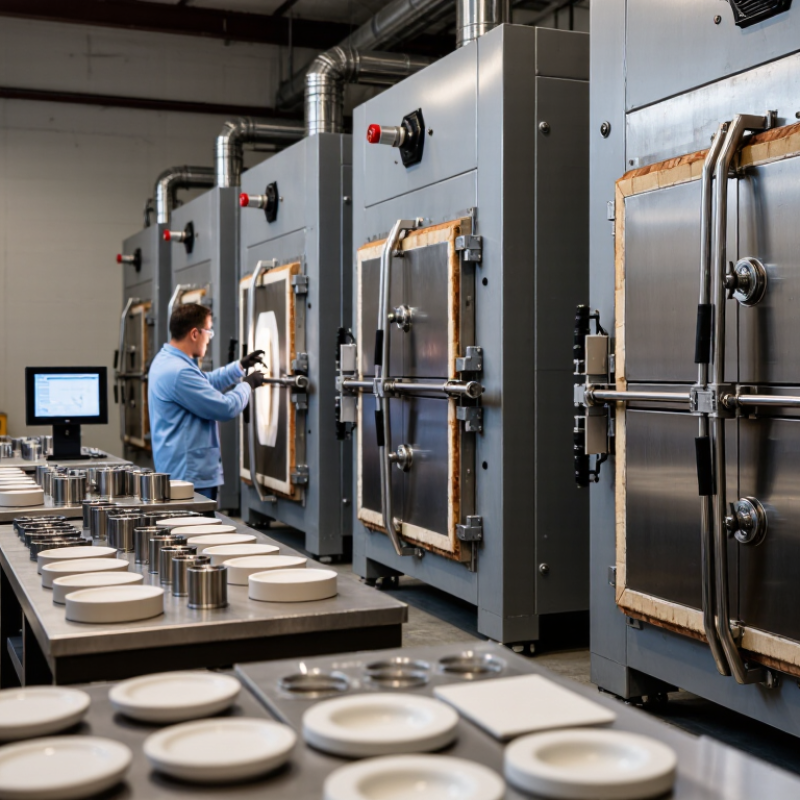
Why Choose High Temperature Ovens for Industrial Use?

What Defines a High-Temperature Oven for Industrial Use?

Why Choose High Temperature Ovens for Industrial Use?
What Defines a High-Temperature Oven for Industrial Use?

A high-temperature industrial oven is defined less by a universal cutoff than by its ability to hold a specified temperature across a working load. Buyers should check maximum operating temperature, chamber dimensions, ramp rate, recovery after door opening, and uniformity under representative loading. A display reading of 500°C does not prove every tray reaches 500°C. Cold corners matter.

Temperature requirements vary by process, including drying, curing, stress relief, and heat treatment. The U.S. Department of Energy’s 2008 report, Improving Process Heating System Performance: A Sourcebook for Industry, estimated that process heating accounts for about 36% of manufacturing energy use. This figure covers process heating broadly, not ovens alone, but it highlights the value of insulation, airflow design, and efficient controls. For repeatability, request a loaded temperature survey and review measurement uncertainty. AMS2750 applies to specific thermal-processing sectors, not every oven. An empty-chamber test may not reflect how a real load behaves.

Tips: Ask for uniformity data at your actual setpoint and load. Confirm sensor placement, calibration intervals, and recovery time. A small test run can reveal uneven airflow before production.

How Do Industrial High-Temperature Ovens Work?

Why Choose High Temperature Ovens for Industrial Use?

How Do Industrial High-Temperature Ovens Work?

An industrial high-temperature oven converts electrical or fuel energy into controlled heat inside an insulated chamber. Heating elements or burners warm the chamber, while fans circulate air around the load. Some systems use radiant heat to warm surfaces directly. Heat moves. A controller monitors thermocouples and adjusts output to hold the programmed temperature. Operators can set gradual ramps and soak periods to reduce uneven heating or thermal shock.

The U.S. Department of Energy’s 2022 Industrial Decarbonization Roadmap estimates that process heating accounts for about 51% of manufacturing energy use. This figure covers manufacturing process heating broadly, not ovens alone. It shows why insulation, airflow, and accurate controls matter. A sensor near the door may read differently from one deep inside a packed chamber. Small details matter. Poor loading can create cold spots, even when the display looks steady.

Tips: Keep parts spaced so air can circulate, and verify temperature with calibrated sensors at representative points. Check seals and exhaust settings regularly. A perfect display reading is not proof of uniform heating. Review the actual load results, too.

Which Industrial Processes Use High-Temperature Ovens?

High-temperature ovens support processes where heat changes a material’s properties, not merely its moisture content. In metalworking, controlled cycles anneal, temper, or stress-relieve components such as gears and fasteners. Temperature uniformity matters: a cold zone can leave hardness inconsistent. Small differences count. Ceramics and technical glass are fired to develop strength, shape, or functional coatings. Powder metallurgy uses high heat to sinter compacted powders, while composite manufacturers cure resin parts to a specified cycle. The right temperature and atmosphere depend on the material, load size, and part geometry. One detail is easy to miss: the process recipe, not the oven’s maximum rating, should guide equipment selection.

The U.S. Department of Energy’s Improving Process Heating System Performance: A Sourcebook for Industry estimates that process heating accounts for about 51% of energy used in U.S. manufacturing.

This figure covers process heating broadly, not ovens alone, but it shows why oven efficiency can affect operating costs. High-temperature equipment also serves alloy heat treatment, materials testing, and thermal processing of electronic ceramics. Operators should check ramp rates and temperature uniformity with representative production loads. Empty-chamber readings can mislead. A practical review should include exhaust needs and the consequences of uneven heating; those checks are sometimes overlooked when production deadlines dominate.

What Benefits Do High-Temperature Ovens Provide?

High-temperature ovens deliver controlled heat for curing coatings, drying ceramics, aging components, and stress-relieving metal parts. Their main benefit is repeatability: programmed ramp rates and soak times help batches reach the same thermal condition. A well-designed airflow system also reduces cold spots around loaded trays. That matters when a slight temperature difference can change a part’s hardness or finish.

The U.S. Department of Energy’s 2022 Industrial Decarbonization Roadmap identifies process heating as roughly 51% of energy use in U.S. manufacturing. This makes oven efficiency more than a utility-bill concern. Insulated chambers, tight door seals, and heat recovery can reduce losses, while calibrated sensors help avoid unnecessary overheating. Small details count.

Still, higher maximum temperature is not automatically better. An oven must match the product’s required profile, load size, and production schedule. Operators should check temperature uniformity under real loading conditions, not just rely on an empty-chamber specification. That extra test can reveal uneven airflow or slow recovery after door openings. It takes time. But overlooking it may create scrap, rework, or inconsistent results. DOE’s Industrial Process Heating Sourcebook also emphasizes evaluating the complete heating system, rather than judging equipment by rated capacity alone.

Why Choose High Temperature Ovens for Industrial Use? - What Benefits Do High-Temperature Ovens Provide?
Benefit or Capability How It Helps Industrial Processes Typical Applications Important Consideration
High-temperature processing Provides controlled heat for processes that require temperatures beyond the range of many standard drying ovens. Heat treatment, sintering, curing, and thermal testing Confirm that the oven’s rated operating temperature suits the material, process, and required cycle.
Controlled temperature uniformity Helps reduce temperature variation across the usable chamber when the oven is properly loaded and operated. Batch heating, material conditioning, and repeatable production cycles Uniformity depends on oven design, airflow, load arrangement, and operating conditions; verify it through testing.
Repeatable process cycles Programmable setpoints and timed cycles can help standardize heating steps between production batches. curing, drying, preheating, and laboratory or production testing Use validated recipes and calibrated temperature sensors where process consistency is critical.
Dedicated heat-treatment capability Supports controlled heating of suitable metals and other materials as part of a defined process. Stress relief, annealing, and other material heat-treatment operations Required temperature profiles depend on the material, part geometry, and applicable process specifications.
Versatility across materials and tasks A suitably configured oven can serve different processes by using appropriate temperature settings and operating procedures. Metal components, ceramics, glass, and heat-resistant materials Check material compatibility, chamber atmosphere requirements, and any restrictions on combustible or volatile substances.
Insulation and heat containment Industrial oven construction is designed to contain heat and support stable operation at its rated conditions. Continuous or batch operations in manufacturing and processing facilities Actual energy use depends on insulation, setpoint, loading, cycle time, door openings, and facility conditions.
Process monitoring and safety controls Temperature controls, alarms, and protective features can help operators monitor operation and respond to abnormal conditions. Production lines, quality-control areas, and process laboratories Safety features vary by model; assess the application’s risk, ventilation, electrical, and installation requirements.

How Should Industries Select and Operate These Ovens?

High-temperature ovens suit industrial work when processes need controlled heating, curing, drying, or heat treatment. To select one, start with the actual material and its required temperature range, not the oven’s maximum rating. Check chamber size against the largest load, then consider how often operators will use it. A tightly packed chamber may heat unevenly. It is tempting to choose the hottest model; that is not always wise.

Ask suppliers for temperature uniformity data and confirm the measurement method. Review insulation, controls, ventilation, and temperature-recording options for your process. During operation, follow the manufacturer’s loading limits and allow adequate space around parts for airflow. Use calibrated sensors, and verify temperatures at representative points when the load or process changes. Small details matter. Avoid opening the door unnecessarily, since repeated heat loss can extend cycles and affect consistency. Keep a maintenance record, too; a gradual drift can be easy to miss.

Tips: Run a trial with a typical load before routine production. Record setpoint, cycle time, and measured temperatures. Do not guess. If results vary, check placement, airflow, and sensor calibration before changing the setpoint. A trial may reveal a limitation in the setup, not just the oven.

FAQS

How does an industrial high-temperature oven heat its chamber?

Electrical elements or fuel burners generate heat inside an insulated chamber. Fans circulate warm air around the load. Some ovens also use radiant heat to warm surfaces directly.

How does an oven maintain its target temperature?

Thermocouples measure chamber temperatures, and a controller adjusts heat output. Operators can program gradual temperature ramps and soak periods. Sensor placement still matters.

What processes use high-temperature ovens?

Common uses include curing coatings, drying ceramics, aging components, and stress-relieving metal parts. The required temperature profile depends on the material and process.

How can operators reduce cold spots?

Leave space between parts so air can circulate around trays and components. Check results at representative points with calibrated sensors. A steady display can be misleading.

Why does temperature uniformity matter?

Uneven heating can affect a part’s hardness, finish, or other properties. It may also lead to scrap or rework. Small differences can matter.

What features can help reduce energy losses?

Insulated chambers, tight door seals, and heat recovery can limit wasted heat. Regularly check seals and exhaust settings. The details deserve attention.

Does a higher maximum temperature make an oven better?

Not necessarily. The oven should match the product’s required profile, load size, and production schedule. I may be oversimplifying, but maximum temperature alone tells little.

Why test an oven with a real load?

A loaded test can reveal uneven airflow or slow temperature recovery after door openings. Empty-chamber readings may not show these problems. That extra test takes time.

Conclusion

High-temperature ovens are engineered to maintain precise, stable heat at levels beyond those of standard industrial ovens. They use insulated chambers, controlled heating elements, airflow systems, and temperature sensors to distribute heat evenly and support consistent processing. Depending on the application, these systems may also include programmable controls and safety features that help operators manage heating cycles reliably.

Industries use high-temperature ovens for processes such as heat treatment, curing, drying, and material testing. Their benefits can include improved product consistency, efficient processing, and the ability to work with materials that require elevated temperatures. When selecting an oven, businesses should consider the required temperature range, chamber size, load type, airflow, control accuracy, energy use, and maintenance needs. Proper installation, operator training, routine inspection, and adherence to operating instructions help ensure safe, dependable performance. Hoge Temperatuur Ovens can be a valuable part of industrial production when the equipment is matched carefully to the process and operated with consistent attention to temperature control.


Liam

Liam

Liam is a dedicated marketing professional with a profound expertise in the industry, where he excels at highlighting the unique advantages of our core products. With a keen understanding of market trends and consumer needs, Liam frequently updates our company’s professional blog, providing......