Why Choose a Drying Oven for Heat Treatment?

Time:2026-09-16 Author:Aria
0%

Choosing the right oven can determine whether heat treatment delivers consistency or costly rework. A drying oven provides controlled temperature, airflow, and exposure time for removing moisture from components, coatings, powders, and finished products. These conditions support repeatable results, especially when materials require gradual heating rather than sudden thermal shock.

“Reliable heat treatment begins with controlled conditions, not simply higher temperatures,” says Dr. Elena Marquez, a thermal-processing engineer specializing in industrial drying systems. Her observation reflects a practical concern: an oven may display the correct temperature while producing uneven results inside the chamber. Airflow patterns, shelf spacing, load density, and door-opening frequency can change the process. Small details matter.

A well-selected Drying Oven Treat system can improve product stability, shorten drying cycles, and reduce energy waste. Operators can monitor temperature profiles, compare batch records, and adjust settings based on real material behavior. The warm metal surface, steady fan movement, and gradual moisture release should support the process—not hide its weaknesses.

There is no universal oven.

The best choice depends on the material, batch size, target moisture level, and required documentation. Some applications may need better insulation. Others may require programmable ramps, exhaust control, or validated temperature uniformity. Even experienced teams can overlook cold spots or over-dry sensitive products. That possibility deserves attention.

This guide examines why manufacturers choose drying ovens for heat treatment, what technical features influence performance, and which evaluation steps help prevent avoidable mistakes. Reliable results come from both equipment quality and disciplined process control.
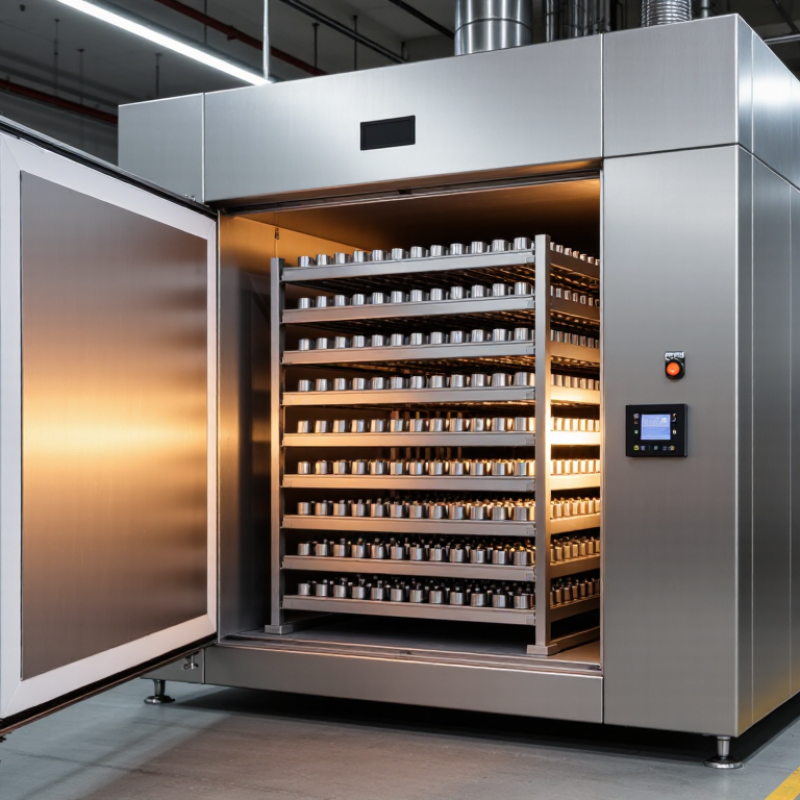
Why Choose a Drying Oven for Heat Treatment?

What Is a Drying Oven in Heat Treatment?

A drying oven in heat treatment is an enclosed chamber that removes moisture through controlled heat and airflow. It is not simply a heated box. The oven manages temperature, circulation, and exposure time around the workpiece.

Moisture may remain in coatings, ceramic parts, powders, or machined components. If heated too quickly, trapped water can cause blistering, cracking, or uneven results. A drying oven gradually raises the temperature and moves warm air across the load. Fans reduce cold spots, while sensors track the chamber and material conditions. Operators usually record temperature readings, loading details, and cycle duration. These records support repeatable processing and quality checks.

Small details matter. Parts should have enough spacing for airflow. Dense loads often need longer drying time. A simple assumption can fail: the chamber may reach its set temperature while the component remains wet inside. Testing with moisture measurements or trial cycles can expose this problem. In practical workshops, door openings also affect stability more than expected. The oven should match the material’s moisture sensitivity, size, and heat tolerance. Calibration is important, but it does not replace good loading practices or careful observation. Some processes need gradual cooling after drying to prevent thermal stress. That step is easy to overlook.

Why Choose a Drying Oven for Heat Treatment? - What Is a Drying Oven in Heat Treatment?

Evaluation Dimension Typical Data or Range What It Means in Heat Treatment Why It Matters
Basic Definition Electrically heated chamber with controlled air circulation A drying oven removes moisture, solvents, or other volatile substances from materials by applying controlled heat and airflow. It provides a cleaner and more repeatable process than uncontrolled open-air heating.
Common Operating Temperature Approximately 50–250 °C for general-purpose ovens The temperature range covers many drying, preheating, curing, aging, and moisture-removal processes. The selected temperature must remain below the material’s degradation, melting, or ignition point.
Higher-Temperature Capability Some specialized units operate up to approximately 300 °C or higher Higher-temperature models can support selected thermal treatments, but they are not automatically equivalent to high-temperature furnaces. Equipment capability should be matched to the required temperature uniformity, atmosphere, and material properties.
Temperature Control Digital controller; commonly adjustable in increments of 1 °C A sensor and controller regulate heater output to maintain the programmed set point. Stable control helps reduce overheating, under-drying, and batch-to-batch variation.
Temperature Uniformity Often specified within approximately ±2 to ±5 °C, depending on model and load Uniformity describes the temperature difference between different locations in the working chamber under defined test conditions. Good uniformity is important when all parts of a load must receive a similar thermal history.
Air Circulation Natural convection or forced convection with a circulation fan Forced-air systems move heated air across the load, while natural-convection systems rely mainly on buoyancy. Forced circulation generally improves heat transfer and reduces temperature gradients, especially for larger loads.
Typical Chamber Sizes Small benchtop chambers to several hundred liters; industrial units may be much larger Chamber volume is selected according to product dimensions, batch size, rack arrangement, and required airflow. A correctly sized chamber avoids wasted energy and helps prevent overloaded shelves that restrict air movement.
Heating Method Electrical resistance heaters are most common Electrical heaters convert electrical energy into heat, which is transferred to the load through convection and radiation. Electric heating allows precise control and does not require combustion gases inside the chamber.
Moisture Removal Exhaust vent, adjustable damper, or continuous air exchange Moist air or solvent vapor is removed while heated air is introduced or recirculated. Effective exhaust prevents vapor accumulation and supports consistent drying performance.
Air Exchange Consideration Higher exhaust improves vapor removal but can increase heat loss Ventilation must balance the need to remove moisture or fumes with the need to maintain temperature and energy efficiency. Incorrect damper settings may cause slow drying, unstable temperature, or unnecessary operating cost.
Typical Heat-Treatment Uses Drying, preheating, curing, aging, moisture conditioning, and low-temperature stress relief The oven provides a controlled thermal environment for processes that do not require a protective atmosphere or extreme temperatures. It is versatile for laboratories, production lines, maintenance operations, and quality-control testing.
Material Examples Metal parts, glassware, ceramics, powders, coatings, polymers, and components after washing Materials may be heated to remove surface water, absorbed moisture, cleaning residues, or processing solvents. The process can improve adhesion, dimensional stability, cleanliness, and readiness for subsequent operations.
Process Time From several minutes to many hours, depending on load and moisture content Drying time depends on material thickness, initial moisture, temperature, airflow, exposed surface area, and loading density. Time should be validated using product temperature and moisture measurements rather than relying only on chamber temperature.
Energy Efficiency Factors Insulated walls, sealed doors, optimized loading, and controlled exhaust Thermal insulation reduces heat loss, while proper airflow and loading improve heat transfer to the product. Efficient operation lowers energy consumption without compromising drying quality.
Advantages Over Open-Air Heating Controlled temperature, repeatable airflow, enclosed workspace, and programmable operation The oven creates a defined and repeatable environment instead of depending on ambient conditions. It improves process consistency and helps protect the load from dust, drafts, and uneven heating.
Limitations Not suitable for every solvent, combustible vapor, oxygen-sensitive material, or very high-temperature process Standard drying ovens are generally designed for non-flammable materials and ordinary air operation unless specifically engineered otherwise. Special applications may require explosion-resistant construction, inert-gas purging, vacuum operation, or a dedicated furnace.
Safety Requirements Temperature limit protection, ventilation, suitable electrical protection, and compatible materials Operators must prevent overheating, vapor accumulation, blocked airflow, and contact between unsuitable materials and hot surfaces. Following the equipment instructions and the material safety data helps reduce fire, exposure, and equipment-damage risks.
Selection Checklist Maximum temperature, chamber volume, uniformity, airflow, exhaust, controller, and load type These specifications define whether the oven can deliver the required process conditions. Choosing from process requirements rather than chamber size alone improves product quality and operating reliability.

Note: The numerical ranges shown are typical industry values and are provided for general guidance. Actual performance depends on oven design, calibration method, load configuration, ambient conditions, and the material being processed.

How Drying Ovens Work During Thermal Processing

Why Choose a Drying Oven for Heat Treatment?

Drying ovens create a controlled environment for removing moisture during thermal processing. Heated air moves across the material and carries moisture toward the exhaust. This process is more predictable than open-air drying. Temperature sensors monitor the chamber, while controllers adjust heating output. Airflow must remain even. Otherwise, one tray may dry faster than another.

During operation, technicians usually preheat the chamber before loading the workpiece. This reduces sudden temperature changes and improves repeatability. A loaded oven then follows a defined heating profile. The profile may include ramping, soaking, and controlled cooling. Each stage affects moisture removal, material strength, and surface quality. Small details matter. Door openings can disturb the temperature balance. Poorly spaced parts can block circulation and create damp areas.

Reliable results depend on more than the oven itself. Operators should verify sensor calibration, record cycle data, and inspect the load after treatment. I have found that visual inspection alone can be misleading. A dry surface may hide moisture inside a thick component. Moisture testing or mass measurements provide stronger evidence. The process is not perfect. Material thickness, ambient humidity, and loading changes can still produce variation. Regular validation helps reveal these weaknesses before they affect production quality.

Key Benefits of Using a Drying Oven

Why Choose a Drying Oven for Heat Treatment?

A drying oven provides controlled heat for removing moisture and stabilizing materials. Its insulated chamber helps maintain a steady temperature around every loaded part. This reduces uneven heating, which can cause warping, cracking, or inconsistent performance. In practical use, operators can set temperature, time, airflow, and cooling conditions with greater precision. The process becomes easier to repeat. That matters when quality checks compare one production batch with another. A drying oven can also protect sensitive components from sudden temperature changes. Still, no oven removes every risk. Load arrangement, material thickness, and moisture level strongly affect results.

Tips:

Leave space between trays for airflow. Avoid overloading the chamber. Place temperature sensors near the densest or coldest area. Record actual temperature readings, not only the programmed setting. Inspect seals and ventilation paths regularly. Small oversights can weaken an otherwise careful process.

Heat treatment in a drying oven may improve dimensional stability, surface dryness, and product reliability. For example, molded parts can leave the chamber with fewer moisture-related defects. Electrical assemblies may benefit from controlled drying before further testing. Operators should verify the material’s recommended temperature range before each cycle. Excessive heat can damage coatings, adhesives, plastics, or insulation. A calibrated controller supports dependable results, while an independent data logger provides useful confirmation. Experience also shows that cooling deserves attention. Removing hot parts too quickly may create stress or condensation. A slower, monitored cooling stage is often safer, though it may extend processing time.

Suitable Materials and Heat Treatment Applications

A drying oven offers controlled heat, steady airflow, and repeatable treatment conditions for many industrial materials. It is especially suitable when moisture removal matters as much as temperature control. Powders, ceramics, glass components, polymers, coatings, adhesives, and electronic assemblies commonly require this process. Materials must tolerate the selected temperature without melting, deforming, oxidizing, or releasing harmful vapors.

Drying applications include removing moisture from molded parts, laboratory samples, insulation, and coated surfaces. Heat can also accelerate curing in adhesives, paints, resins, and composite components. Some plastics benefit from preheating before forming, while electronic assemblies may need gentle conditioning after washing. Metal parts can receive low-temperature drying or stress-relief steps, but a standard drying oven is not suitable for every metallurgical treatment.

Load placement affects results. Thick parts need more time because their centers heat slowly. Operators should avoid blocking air passages and should leave space between trays. Temperature mapping with calibrated sensors helps confirm uniform heating. Record the material mass, set temperature, exposure time, and final condition. Small errors matter.

A drying oven is not a universal heat-treatment system. High-temperature hardening, controlled-atmosphere work, and processes requiring rapid quenching need specialized equipment. Material datasheets and safety information should guide every cycle. In practice, an apparently dry surface may hide internal moisture, so visual inspection alone can be misleading.

Drying ovens are suitable for controlled heating, drying, curing, annealing, aging, and stress-relief processes. The chart shows representative temperature ranges commonly used for selected materials and applications; actual settings depend on material grade, part geometry, process time, and required properties.

How to Select the Right Drying Oven for Your Process

Choosing a drying oven starts with the load, not the catalog. Define material, moisture level, tray spacing, batch weight, and required cycle time. These details determine chamber volume and airflow needs. A warm interior is not enough. The load must reach its target temperature evenly. Ask for temperature uniformity data under realistic loading. Empty-chamber results can mislead.

Set the operating range with a safety margin. If your process needs 120°C, an oven rated far above that may waste energy. Check control stability, sensor placement, ramp rates, and recovery after door opening. Independent calibration and traceable records support defensible quality decisions. For heat-sensitive products, gentle airflow may matter more than maximum airflow. I have seen warped parts caused by aggressive circulation. That risk was easy to overlook.

Review construction and daily usability. Insulation, door seals, removable shelves, and cleanable surfaces affect long-term performance. Compare electrical demand, maintenance access, alarm functions, and data logging. Choose controls that operators can understand during a busy shift. A complex interface can create errors. Before purchase, test a representative load whenever possible. Measure the center, corners, and coolest-looking tray. Then challenge your assumptions. A smaller oven may work better if loading remains consistent. The best choice balances repeatability, safety, throughput, and practical operating habits.

FAQS

What is a drying oven used for in heat treatment?

It removes moisture from coatings, ceramic parts, powders, and machined components. Controlled heat and airflow reduce uneven drying. It is more than a heated box.

How does a drying oven remove moisture?

Heated air moves across the workpiece and carries moisture toward the exhaust. Fans help reduce cold spots inside the chamber. Sensors monitor temperature during the cycle.

Why should the temperature rise gradually?

Trapped water can cause blistering, cracking, or uneven results. A gradual ramp reduces sudden stress. Fast heating can be a bad shortcut.

Does reaching the set temperature prove that parts are dry?

No. The chamber may reach its setting while a thick component remains wet inside. Moisture testing or mass measurements provide stronger evidence. Do not guess.

How should parts be loaded into the oven?

Leave space between trays and components for airflow. Avoid dense stacking because blocked areas may stay damp. Place sensors near the coldest or densest load area.

What settings affect drying performance?

Temperature, airflow, exposure time, and cooling conditions all matter. Material thickness and moisture level also change the required cycle. One setting will not suit every load.

Why are records and calibration important?

Operators should record actual temperatures, loading details, and cycle duration. Calibration supports dependable control, but it cannot fix poor loading. Records reveal changes between production batches.

Can door openings affect the treatment cycle?

Yes. Opening the door can disturb temperature balance and extend drying time. Frequent openings may create uneven conditions across trays. Small interruptions matter.

Why is controlled cooling needed after drying?

Hot parts removed too quickly may develop thermal stress or condensation. A slower cooling stage can protect surfaces and dimensions. This step is easy to overlook.

Conclusion

A drying oven is a controlled thermal-processing chamber designed to remove moisture, solvents, or other volatile substances while applying consistent heat to materials. During operation, heated air circulates through the chamber, maintaining a stable temperature and promoting even drying. Depending on the process, airflow, temperature, heating time, and ventilation can be adjusted to achieve reliable results without damaging the material.

The key benefits of a drying oven include improved product consistency, efficient moisture removal, repeatable processing, and better control over heat-treatment conditions. It can be suitable for metals, ceramics, powders, coatings, components, and other materials that require drying, preheating, curing, or moisture reduction. When choosing the right equipment, users should consider chamber size, operating temperature, airflow design, temperature uniformity, loading requirements, energy efficiency, safety features, and process monitoring needs. A well-selected Drying Oven Treat solution can support stable quality and efficient production.


Aria

Aria

Aria is a dedicated marketing professional with a deep passion for innovative strategies and a keen understanding of our company's product offerings. With a wealth of experience in the industry, Aria excels at crafting engaging content that highlights the unique features and benefits of our......