Top Electrode Drying Ovens for Battery Production?

Time:2026-10-01 Author:Aria
0%

Selecting the best Electrode Drying Ovens requires more than comparing temperature ranges. Battery manufacturers must examine airflow uniformity, solvent removal, web speed, and energy consumption. A small temperature variation can leave visible differences across a coated electrode. Edge cracking may appear hours later. That is the difficult part.

Dr. Brian Morin, an electrode-manufacturing specialist, describes the practical purpose clearly: “Drying is where the coating becomes a functional electrode.” His observation reflects real production experience. The oven must remove solvent without disturbing the slurry structure. It must also protect binder distribution and preserve active-material contact. These details influence adhesion, resistance, cycle life, and downstream calendering.

A reliable comparison should include heating-zone control, exhaust design, dew-point management, and maintenance access. Operators should inspect the electrode surface, not only the control screen. A stable reading can still hide uneven drying. That assumption needs challenging.

The strongest systems provide repeatable results at realistic production speeds. They also make troubleshooting less mysterious. For example, a slight color change near the foil edge may indicate poor airflow balance. A sticky surface may suggest insufficient residence time. Neither symptom should be ignored.

This guide evaluates leading Electrode Drying Ovens through those practical lenses. It considers performance, safety, operating cost, and scale-up potential. No oven wins every production line. The right choice depends on chemistry, coating width, solvent system, and factory conditions. Even experienced teams can overlook one variable. Careful testing remains essential.
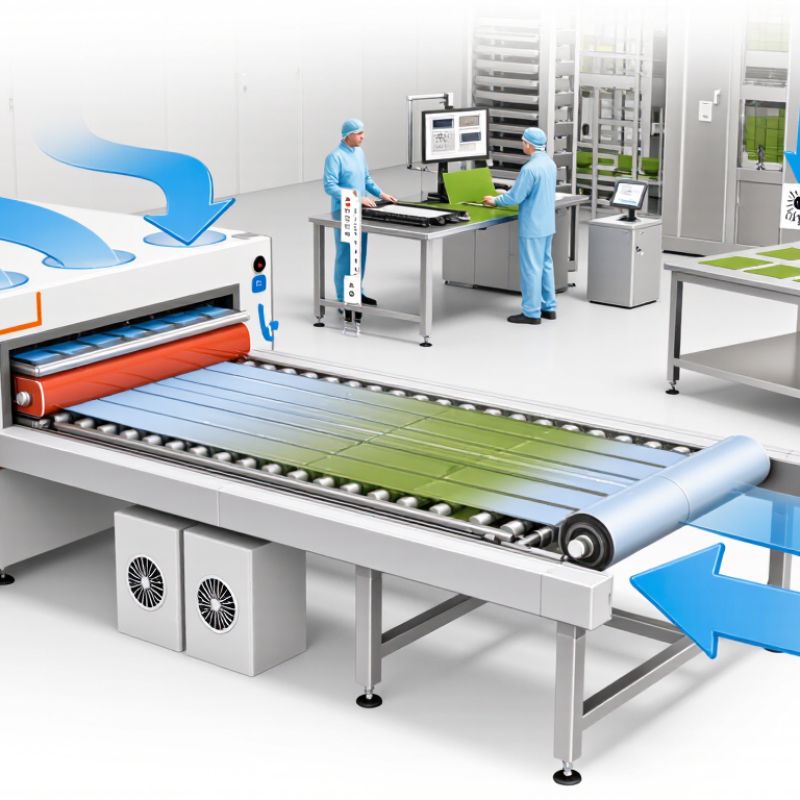
Top Electrode Drying Ovens for Battery Production?

Electrode Drying Ovens: Purpose and 80–150°C Process Windows

Top Electrode Drying Ovens for Battery Production?

Electrode Drying Ovens: Purpose and 80–150°C Process Windows

Electrode drying ovens remove solvent and moisture from coated battery foils. They also help stabilize binder distribution before calendering and cell assembly. In production, the 80–150°C range is a practical process window, not a fixed recipe. Lower temperatures may leave residual solvent, while excessive heat can cause cracking, binder migration, or uneven porosity. The ideal setting depends on coating thickness, solvent type, web speed, and electrode chemistry. Oven performance should be checked through temperature mapping, exhaust measurements, and residual-solvent testing.

Tips: Measure the electrode surface, not only the oven air. Keep airflow balanced across the web. Record inlet temperature, outlet temperature, residence time, and moisture levels. A staged profile often works better than one aggressive setting. Start near 80–100°C, then increase carefully when the coating tolerates it. Never assume a 120°C setting suits every formulation.

A useful oven should provide stable airflow, uniform heating, safe solvent handling, and repeatable control across production zones. Operators should inspect edge drying, foil tension, and coating appearance during trials. A smooth surface can still hide residual solvent. That requires testing. I would also challenge the common idea that hotter means faster and better. It may shorten drying time, but it can reduce electrode performance when the structure changes too quickly. Process windows need validation with real production materials, not only empty-oven data.

Moisture Control: Achieving Electrode Residual Moisture Below 100–300 ppm

Top Electrode Drying Ovens for Battery Production?

Moisture control decides more than electrode appearance. Many cell producers target residual moisture below 100–300 ppm before coating, calendaring, or electrolyte filling. The exact limit depends on chemistry and process design. The U.S. Department of Energy’s Battery Manufacturing R&D Roadmap identifies moisture reduction as a critical manufacturing priority. The IEA reported global battery demand above 750 GWh in 2023, making small drying errors expensive at scale. A damp electrode can increase gas formation, reduce cycle life, and destabilize the solid electrolyte interface.

A suitable oven needs uniform airflow, stable temperature control, and documented dew-point performance. Do not trust the display alone. Measure moisture using Karl Fischer analysis, and compare samples from the front, center, and rear of each tray. In practical trials, operators should record loading weight, drying time, electrode temperature, and cooling exposure. A 120 ppm result may look excellent, but poor sampling can hide wet edges. That is an uncomfortable weakness.

Tips: Pre-dry trays and fixtures. Keep doors closed. Use sealed transfer containers. Validate every recipe after changing electrode thickness or loading density. Repeat tests after maintenance. A perfect number is not always a perfect process. Reports from the International Energy Agency and the U.S. Department of Energy support tighter process monitoring, but each factory still needs its own validated moisture window.

Top Electrode Drying Ovens for Battery Production? – Moisture Control: Achieving Electrode Residual Moisture Below 100–300 ppm

Oven Configuration Typical Battery Application Operating Temperature Drying Atmosphere Typical Dew Point Typical Residence Time Typical Electrode Residual Moisture Temperature Uniformity Moisture-Control Characteristics
Continuous hot-air oven High-volume coating lines for water-based cathodes and anodes 80–160 °C Heated dry air with recirculation −20 to −40 °C 5–30 min 150–500 ppm ±3–5 °C Effective for bulk solvent removal; final moisture depends strongly on web speed, electrode loading, and exhaust balance.
Multi-zone convection oven Production coating lines requiring staged drying and controlled binder migration 60–180 °C by zone Dry-air recirculation with independent exhaust zones −30 to −50 °C 8–40 min 100–300 ppm ±2–4 °C The preferred configuration for balancing drying rate, electrode quality, solvent removal, and final moisture control.
Vacuum batch drying oven Small-to-medium production lots, pilot lines, and post-calendering electrode treatment 80–150 °C Vacuum, typically 1–20 kPa absolute Not normally specified; dry vacuum environment 8–24 h 50–200 ppm ±2–5 °C Low pressure lowers the boiling point and supports deep moisture removal, but cycle time and loading uniformity must be carefully managed.
Vacuum continuous oven High-value electrode webs where low moisture and continuous processing are required 70–140 °C Continuous vacuum with controlled dry-gas purge Equivalent to approximately −40 to −60 °C 20–90 min Below 100–200 ppm ±2–3 °C Suitable when a conventional convection oven cannot consistently achieve the required moisture specification at production speed.
Inert-gas circulation oven Moisture-sensitive electrodes and processes requiring reduced oxygen exposure 80–160 °C Dry nitrogen or other qualified inert gas −40 to −60 °C 30 min–4 h 80–250 ppm ±2–4 °C Maintains a low-humidity environment and can reduce oxidation risk; gas purity, leakage, and circulation rate are critical.
Radiant-assisted drying oven Fast drying of thin coatings and pilot-scale process development 80–200 °C surface temperature Dry air or inert-gas-assisted airflow −30 to −50 °C 3–20 min 150–400 ppm ±4–8 °C Can shorten drying time, but excessive surface heating may cause skinning, cracking, binder redistribution, or non-uniform residual moisture.
Final vacuum bake oven Electrode stacks, rolls, or assembled cells before electrolyte filling 80–120 °C High vacuum with dry inert-gas backfill Typically below −60 °C equivalent 12–48 h Below 100 ppm when properly validated ±2–4 °C Used as a final moisture-reduction step; product temperature, load density, vacuum stability, and transfer time affect the result.
Engineering reference: Values shown are representative operating ranges used for lithium-ion electrode drying. Actual residual moisture depends on coating formulation, active-material loading, foil width, coating thickness, line speed, oven loading, exhaust rate, vacuum level, dew point, and measurement method. Moisture results should be verified using a validated Karl Fischer or equivalent analytical procedure.

Vacuum, Convection, and IR Ovens: Comparing 1–10 mbar Drying Conditions

Top Electrode Drying Ovens for Battery Production?

Electrode drying can consume roughly 20–30% of battery cell manufacturing energy, according to process analyses by Kwade and colleagues. The IEA reported global battery demand above 750 GWh in 2023. Small drying losses now scale quickly.

At 1–10 mbar, vacuum drying removes moisture at lower temperatures and protects sensitive binders. Around 10 mbar, water evaporates efficiently under controlled heating. Below the water triple-point pressure, however, liquid-water assumptions become unreliable. Solvent chemistry matters. For NMP-based coatings, vapor pressure and recovery design require careful validation.

Vacuum systems need tight seals and strong vapor handling. Convection ovens offer predictable airflow and easier scale-up, but hot air can create a dry surface while moisture remains inside the coating. That hidden gradient can weaken adhesion. IR ovens transfer energy directly into the electrode surface and can shorten residence time. They may also overheat dark current collectors or produce uneven drying across wide webs.

Industry roadmaps from the U.S. Department of Energy identify drying as a major manufacturing energy burden. In practice, a hybrid line often performs better than one heating method alone. Vacuum-assisted convection can control bulk moisture, while IR provides a short finishing stage.

The uncomfortable detail is consistency. A lower pressure does not automatically mean better electrodes. Operators should map residual moisture, binder migration, coating temperature, and peel strength across the web. One pressure setting rarely fits every formulation.

How to Compare Top Ovens: ±2°C Uniformity, Throughput, and Energy Efficiency

Electrode drying ovens now deserve comparison beyond advertised temperature ranges. A ±2°C uniformity claim matters because uneven drying can leave solvent pockets, alter binder distribution, and increase scrap risk. During factory trials, place calibrated thermocouples across the loaded electrode zone, not only near the air inlet. Check empty and full-load profiles. A stable chamber can behave differently after loading.

Throughput should be measured as kilograms of solvent removed per hour, not simply tray capacity. Compare actual drying time, loading density, exhaust volume, and recovery performance. The IEA’s Global EV Outlook 2024 reports that electric-vehicle battery demand exceeded 750 GWh in 2023. Production pressure is real. Yet faster heating is not automatically better. Excessive airflow may raise energy use and disturb coating quality. The U.S. Department of Energy’s Industrial Decarbonization Roadmap identifies process heating as roughly 51% of industrial energy consumption, making kWh per kilogram of solvent removed a useful efficiency metric. Energy figures can still mislead when moisture loading differs.

Tips: Request a documented uniformity map at operating temperature. Ask for full-load throughput data. Measure inlet and exhaust temperatures. Record kWh during a repeatable cycle. I would also challenge optimistic test conditions. They are common. Compare maintenance time, insulation condition, and heat-recovery results over several runs. A small temperature drift may appear harmless, but repeated drift can become a costly quality problem.

Safety Qualification: NMP Recovery Above 99%, ATEX Compliance, and 24/7 Operation

Top Electrode Drying Ovens for Battery Production?

Safety qualification begins with measured solvent performance, not brochure promises. A qualified oven should demonstrate NMP recovery above 99% under defined airflow, temperature, and loading conditions. Test reports must show inlet concentration, outlet concentration, recovery rate, and sampling duration. Small leaks matter. They can affect worker exposure, emissions control, and production stability. Engineers should review these results during factory acceptance testing and repeat critical checks after installation.

ATEX compliance requires more than certified electrical parts. The complete drying system needs a documented hazard assessment, suitable zoning, grounding, pressure protection, and controlled ventilation. Sensors should detect abnormal temperature, solvent concentration, airflow, and fan operation. Interlocks must stop heating quickly when readings exceed safe limits. Procedures should be practical. Operators may need clear alarms during a night shift.

Around-the-clock operation also exposes weak design choices. Continuous production needs accessible filters, spare sensors, thermal protection, and planned maintenance windows. Recovery performance can decline when filters load or seals age. That risk is often underestimated. A perfect uptime claim deserves suspicion. In real facilities, 24/7 reliability comes from redundancy, inspection records, operator training, and disciplined response testing. Qualification should include abnormal scenarios, not only a clean production run. The best oven is the one that remains predictable when conditions are less than perfect.

Top Electrode Drying Oven Qualification Benchmarks

NMP recovery above 99%, ATEX compliance, and continuous 24/7 operation

The chart summarizes key safety and operating thresholds commonly used when qualifying electrode drying ovens for lithium-ion battery production. NMP recovery is shown as a minimum target, ATEX compliance represents the required conformity status for hazardous-area operation, and 24 hours per day indicates continuous-duty capability.

FAQS

What is the purpose of an electrode drying oven?

It removes solvent and moisture from coated battery foils. It also helps stabilize binder distribution before calendering and cell assembly.

Is 80–150°C suitable for every electrode formulation?

No. This range is a practical process window, not a universal recipe. Coating thickness, solvent type, web speed, and electrode chemistry affect the setting. One temperature cannot fit everything.

What problems can excessive drying heat cause?

Excessive heat may cause cracking, binder migration, or uneven porosity. Drying too quickly can change the electrode structure. Hotter is not always better.

How should operators choose an initial temperature?

Start near 80–100°C and increase gradually when the coating tolerates it. Check surface appearance, foil tension, edge drying, and residual solvent. A staged profile may work better than one aggressive setting.

How can oven temperature uniformity be verified?

Use calibrated thermocouples across the loaded electrode zone. Do not measure only near the air inlet. Test both empty and full-load conditions. Loading changes chamber behavior.

How should oven throughput be compared?

Compare kilograms of solvent removed per hour. Also record drying time, loading density, exhaust volume, and recovery performance. Tray capacity alone can hide weak production results.

Which energy measurement is useful for comparing drying ovens?

Measure kilowatt-hours per kilogram of solvent removed. Record inlet temperature, exhaust temperature, moisture levels, and cycle duration. Different moisture loads can make energy figures misleading.

What safety checks should a solvent-based drying oven include?

The system should monitor temperature, solvent concentration, airflow, and fan operation. Interlocks should stop heating when readings exceed safe limits. Grounding, ventilation, pressure protection, and hazard assessment are also necessary.

How should solvent recovery performance be validated?

Test recovery under defined airflow, temperature, and loading conditions. Reports should show inlet concentration, outlet concentration, recovery rate, and sampling duration. Repeat important checks after installation. Small leaks matter.

What supports reliable operation during continuous production?

Use accessible filters, spare sensors, thermal protection, and planned maintenance windows. Inspect seals and filters regularly because recovery performance may decline. Test alarms and abnormal shutdowns, not only clean production runs. Perfect uptime claims deserve caution.

Conclusion

Electrode Drying Ovens are essential for removing moisture and residual solvents from battery electrodes after coating, helping improve cell quality, storage stability, and production consistency. Typical drying processes operate within an 80–150°C temperature range, while moisture-control targets may require residual moisture levels below 100–300 ppm, depending on the electrode material and cell design. Vacuum, convection, and infrared systems offer different advantages: vacuum drying can operate under conditions of approximately 1–10 mbar, convection supports stable large-scale processing, and infrared heating can provide rapid energy transfer when carefully controlled.

When comparing drying ovens, manufacturers should evaluate temperature uniformity of around ±2°C, usable throughput, cycle time, energy consumption, and long-term operating reliability. Safety qualification is equally important, especially for systems handling solvent vapors. Key considerations include solvent recovery performance above 99%, appropriate ATEX compliance where applicable, effective ventilation and monitoring, and the ability to support continuous 24/7 production with dependable controls and maintenance access.


Aria

Aria

Aria is a dedicated marketing professional with a deep passion for innovative strategies and a keen understanding of our company's product offerings. With a wealth of experience in the industry, Aria excels at crafting engaging content that highlights the unique features and benefits of our......